Why Wittgenstein Believed Language Sets the Limits of the World
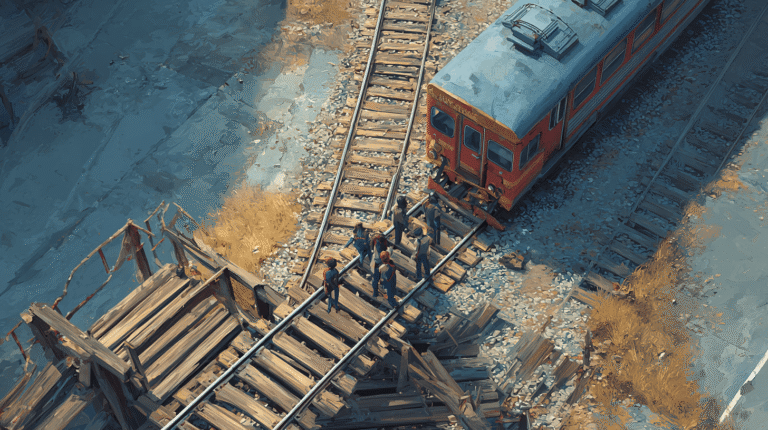
Sometime before the First World War, Ludwig Wittgenstein came across an account of a Paris courtroom using miniature cars and dolls to reconstruct a traffic accident for a jury. The model did not describe the crash. It stood in for it, piece for piece, position for position, so that anyone looking at the toy street could see what had happened on the real one. According to the story Wittgenstein later told friends, this small legal demonstration cracked open a much larger question that had been troubling him: what allows a sentence, a string of sounds or marks, to represent something happening in the world at all?
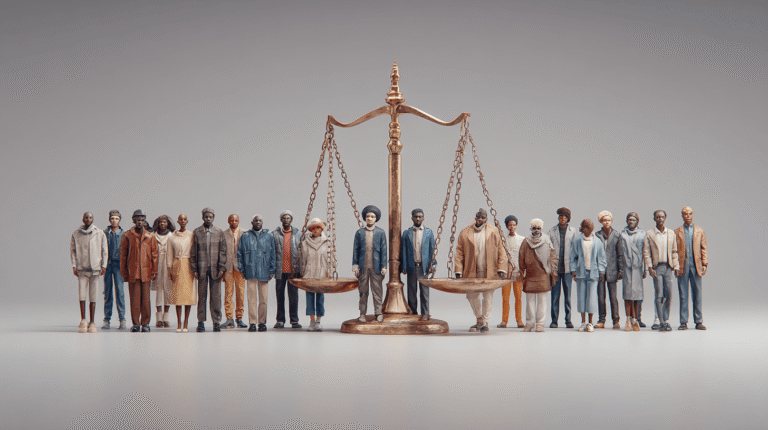
His answer became one of the most quoted lines in twentieth-century philosophy: that the limits of language are the limits of the world. It sounds like a riddle, and it has often been simplified into one. But Wittgenstein was not saying that talking about something makes it real, or that reality bends to whatever we choose to call it. He was making a much more precise claim about what can be thought, said, and shown — and where that ability runs out.
Understanding why he made that claim, and how he later came to doubt parts of it, explains one of philosophy’s strangest career arcs. Wittgenstein spent his twenties building an airtight theory of how language pictures the world. He spent his later years dismantling it, arguing that meaning comes not from pictures but from use. Both phases still shape how philosophers, linguists, and even computer scientists think about the connection between words and reality.
The World Made of Facts, Not Things
The book that made Wittgenstein famous, the Tractatus Logico-Philosophicus, opens with a claim that startles most first-time readers: “The world is everything that is the case.” Not everything that exists. Everything that is the case.
The distinction matters. For Wittgenstein, the world is not a collection of objects sitting in space, waiting to be labeled. It is a collection of facts — situations in which objects stand in particular relations to one another. A chair is an object. “The chair is next to the window” is a fact. Wittgenstein argued that language connects to reality at the level of facts, not objects, because only a fact has the kind of structure a sentence can match.
This was not an isolated idea. Wittgenstein developed it while working alongside Bertrand Russell and under the influence of Gottlob Frege, two of the founders of modern logic. Both were trying to explain how a sentence’s structure could mirror the structure of what it describes, so that logic itself could serve as a tool for testing whether a statement made sense. Wittgenstein pushed that project further than either of them had, turning it into a complete account of meaning, thought, and the boundaries of philosophy itself.
A Sentence as a Small Model of Reality
This is where the courtroom model becomes more than a colorful anecdote. Wittgenstein’s picture theory of meaning holds that a proposition works the same way the toy street worked. A true sentence and the fact it describes share a logical form — the same arrangement of relationships — even though one is made of words and the other is made of events.
Take the sentence “the cat is on the mat.” According to the picture theory, this sentence is meaningful not because “cat,” “mat,” and “on” are separately linked to things in the world, but because the whole arrangement of the sentence mirrors a possible arrangement of a cat and a mat. The sentence pictures a situation. If the situation is real, the sentence is true. If not, it is false — but still meaningful, because it still pictures something that could be the case.
This explains why Wittgenstein thought nonsense and falsehood are entirely different problems. A false sentence pictures a situation that does not happen to hold. A nonsensical sentence pictures nothing at all, because it violates the logical form that connects language to reality in the first place.
The Boundary Where Language Stops
If sentences work by picturing possible facts, then language can only reach as far as facts can be pictured. This is the reasoning behind the Tractatus‘s most famous proposition: “The limits of my language mean the limits of my world.”
Wittgenstein meant this almost literally, within his own system. Whatever cannot be arranged into a logical picture of a possible fact cannot be meaningfully said — it can only be shown, or passed over in silence. He placed ethics, aesthetics, and the meaning of life on the far side of that boundary. Not because he thought they were unimportant. He considered them the most important things a person could think about. He believed they were too important, and too fundamental, to be captured by propositions that merely picture facts.
This is why the Tractatus ends with one of philosophy’s most quoted closing lines: “Whereof one cannot speak, thereof one must remain silent.” It reads as a command, but it is closer to a conclusion. If meaning depends on picturing facts, and value and purpose are not facts among other facts, then no sentence can state what makes life worth living. It can only be lived, or shown through how a person acts.
Why “Creates” Is the Wrong Word — and the Right One
The Korean and English phrasing that language “makes” or “creates” the world can mislead readers into picturing a kind of linguistic magic, as though reality did not exist until someone named it. Wittgenstein was not a mystic of that sort, and the Tractatus is not a work of idealism.
What language creates, in his account, is not the world of physical objects but the space of what can be represented as true or false. Two people who speak different languages can still picture the same fact, because the logical form beneath the words is shared, not invented. What changes from person to person is not reality, but the reach of what each person’s language allows them to picture clearly. A thinker without the concept of prime numbers cannot state a false claim about them, but neither can they picture a true one. The limit is not on the world. It is on the region of the world that can be turned into thought.
This distinction is subtle, and interpreters have long argued about how far to press it. Some readers, sometimes called the “resolute” school, argue that Wittgenstein intended the entire ladder of propositions in the Tractatus to be recognized as nonsense once climbed, including the claim about the limits of language itself. Others read the book more traditionally, as gesturing toward truths that exist but cannot be stated. The debate has never fully settled, and Wittgenstein’s own later silence on the matter has not helped resolve it.
When Wittgenstein Broke His Own Picture
What happened next in Wittgenstein’s career is unusual for a philosopher of his stature. He did not simply build on the Tractatus. He spent much of his later life arguing against it.
By the time he returned to philosophy at Cambridge in the late 1920s, Wittgenstein had come to doubt that language works by picturing logical facts at all. His later masterwork, the posthumously published Philosophical Investigations, replaced the picture theory with something far less tidy: the idea that meaning comes from use. A word does not get its meaning by matching a fixed logical structure in the world. It gets its meaning from the role it plays in a “language game” — a pattern of activity, like giving orders, telling jokes, or measuring wood, in which the word does a job.
This shift changed his account of limits as well. Instead of one universal logical form shared by all meaningful language, Wittgenstein now described countless overlapping “forms of life,” each with its own practices and its own criteria for what counts as sense. The limits of language were no longer fixed by logic alone. They were set by the practices a community actually shares — which meant they could be as varied, and as changeable, as human life itself.
Objections That Still Divide Philosophers
Both phases of Wittgenstein’s thought attracted serious pushback. The Vienna Circle, a group of logical positivists, read the Tractatus as scientific support for dismissing ethics and metaphysics as meaningless — a reading Wittgenstein himself resisted, since he considered the unstatable half of the book, not the logical half, its real point.
The later philosophy drew a different kind of criticism. Some philosophers argued that grounding meaning in shared practices risks a kind of relativism, in which nothing can be judged nonsensical across different forms of life. Others have questioned whether Wittgenstein’s famous argument against a wholly private language — the claim that a person cannot invent a language only they could ever understand or check — fully succeeds, since the argument’s exact structure remains a subject of active scholarly dispute.
Wittgenstein never resolved these tensions publicly. He published almost nothing after the Tractatus during his lifetime, leaving the Investigations to appear only after his death in 1951, edited from notebooks and dictated remarks. That fact alone has shaped how the later philosophy is read: as a set of exploratory remarks rather than a finished system.
The Legacy: From Logic to Ordinary Language
The two Wittgensteins left two different inheritances. The early picture theory fed directly into logical positivism and the broader project of analyzing language through formal logic, influencing decades of work in philosophy of language and the foundations of mathematics. The later philosophy of language games helped launch ordinary language philosophy at Oxford, associated with figures such as Gilbert Ryle and J. L. Austin, who examined how everyday speech actually functions rather than trying to reduce it to logical form.
Both threads still run through philosophy of mind, linguistics, and cognitive science today, wherever researchers ask whether meaning is best explained by structure, by use, or by some combination the field has not yet settled.
Why It Still Matters
The question Wittgenstein asked has not gone away; it has simply found new settings. Every debate about whether a machine that manipulates language convincingly can be said to understand anything revives, in a different form, his question about what connects words to meaning in the first place. So does every argument about translation, about whether some thoughts genuinely cannot survive being carried from one language into another.
Wittgenstein’s deepest insight was not that language invents the world, but that it draws the outline of what a mind can hold up against the world and call true or false. Everything past that outline is not proven false. It is simply outside what a sentence, on his account, was ever built to do.
That is the real weight behind his most famous line. The limits of language are not a cage built around the world. They are the edge of what any of us can turn into a claim at all.