Why Shakespeare Is Still Called the Greatest Writer in History
A Glover’s Son Becomes the Measure of Genius
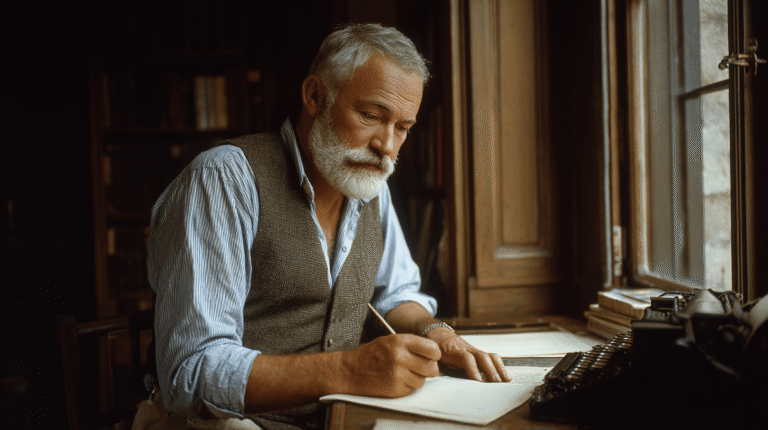
William Shakespeare never attended a university. He left no letters describing his creative process, no diary explaining why he wrote what he wrote. Most of what we know about his life comes from property records, court documents, and a handful of signatures.
And yet, more than four hundred years after his death, his plays are still performed somewhere in the world nearly every day, in dozens of languages, by people who have never set foot in England. Students in Tokyo memorize his soliloquies. Directors in Lagos stage his tragedies in modern dress. Literary critics still use his name as shorthand for the outer limit of what a writer can accomplish.
The question worth asking is not simply that Shakespeare is considered great. It is what, specifically, made his work durable in a way almost no other writer’s has been. The answer has less to do with reputation and more to do with a set of concrete choices he made about language, character, and story — choices that changed what English literature could do.
A Theater Trained by Necessity, Not by Oxford
Shakespeare grew up in Stratford-upon-Avon, the son of a glove maker who held local civic office before falling into debt. He likely attended the town’s grammar school, where students drilled in Latin grammar and classical rhetoric, but there is no record of him continuing to university, unlike several of his literary rivals.
Instead, his education came from the London theater itself. By his late twenties he was working as an actor and playwright for a commercial playhouse, writing scripts meant to be performed within days or weeks, for audiences ranging from aristocrats to laborers who paid a penny to stand in the open yard.
This mattered more than it might seem. Shakespeare was not writing for a small circle of educated critics. He was writing for a paying crowd that would walk out if bored, which forced his plays to work on multiple levels at once — a bawdy joke for the groundlings, a philosophical argument for the educated few, and a gripping plot for everyone in between. That commercial pressure, often treated as a limitation, is one reason his plays remain so accessible today.
A Vocabulary Built for the Moment It Needed
One of the most frequently repeated claims about Shakespeare is that he invented over a thousand English words. This is an exaggeration, and modern scholars using digitized historical texts have shown that many of the words once credited to him were already in use before he wrote them down. What is well established, however, is that he was an unusually inventive user of existing language, frequently converting nouns into verbs, combining words in new ways, and stretching grammar to fit the emotional pressure of a scene.
When Shakespeare needed a word for the crushing weight of ambition or the specific cruelty of betrayal, he often built one rather than settling for an imprecise alternative. This is why phrases from his plays — “in a pickle,” “wild-goose chase,” “break the ice” — became permanent fixtures of everyday English, often outliving the audience’s memory of which play they came from.
The larger point is not the exact number of words he coined. It is that Shakespeare treated the English language as something flexible enough to be reshaped by whatever a character needed to say. Few writers before him had used the language with that much freedom, and fewer still had made it look effortless.
Characters Who Argue With Themselves
Before Shakespeare, dramatic characters in English theater tended to announce their intentions and then act on them. Shakespeare’s major characters do something different: they think out loud, contradict themselves, and change their minds in real time, in front of the audience.
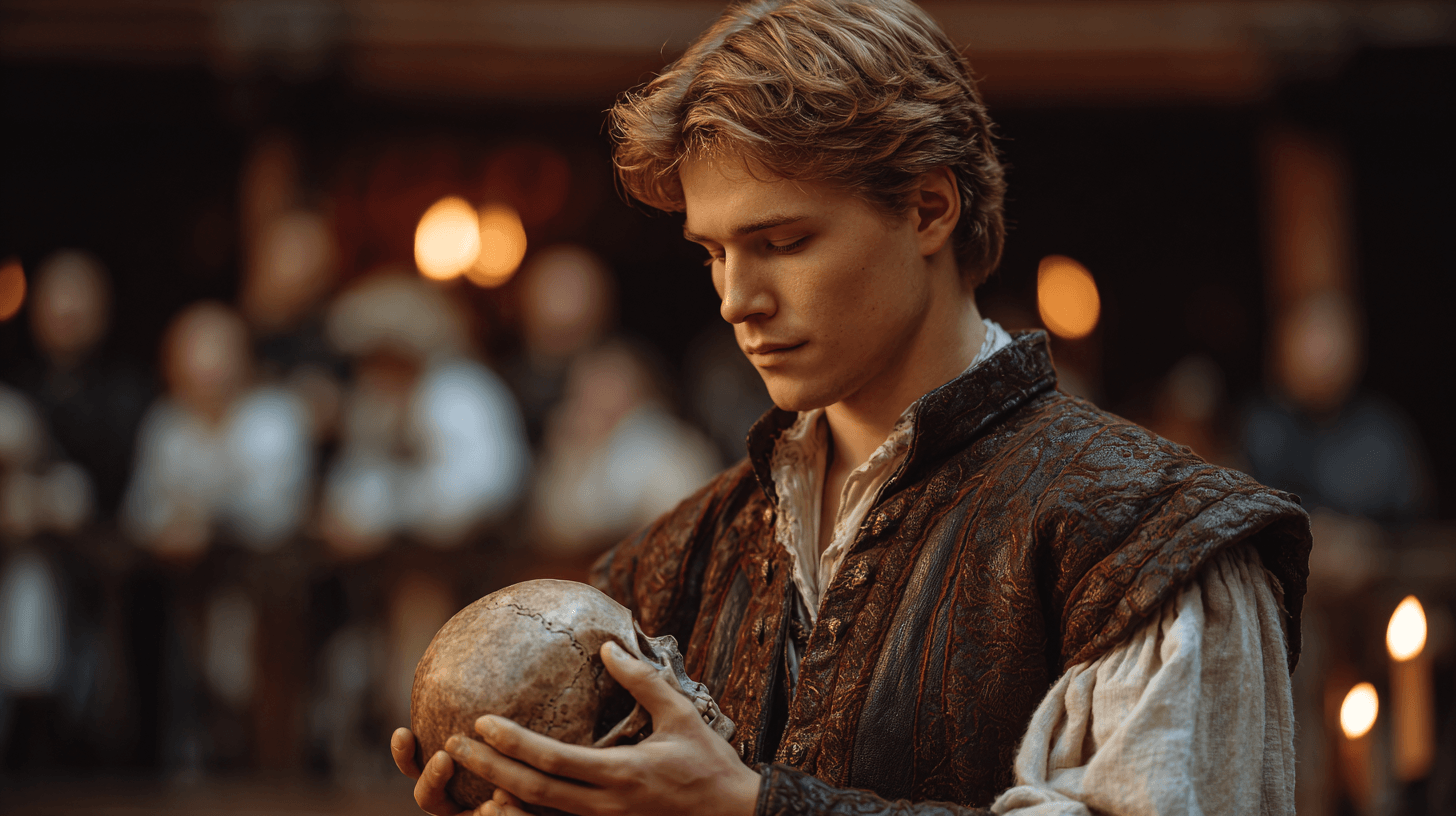
Hamlet is the clearest example. His famous soliloquies are not speeches explaining a decision already made. They are the process of deciding, staged as thought itself — doubt colliding with duty, fear colliding with reason. Literary scholars have long pointed to this technique as a major turning point in how drama represented the human mind, treating internal conflict as dramatically interesting in its own right, not merely as a setup for action.
This is part of why Shakespeare’s plays continue to feel psychologically real centuries later. His villains are rarely simply evil, and his heroes are rarely simply good. Macbeth wants the crown and is horrified by what getting it requires of him. Both things are true in the same character, at the same time, which is closer to how real people actually behave than the clean moral categories common in earlier drama.
Borrowed Plots, Original Meanings
It is worth being direct about something popular memory often gets wrong: Shakespeare did not invent most of his stories. Romeo and Juliet was adapted from an existing narrative poem. Hamlet drew on older Scandinavian legend. King Lear had earlier versions in English chronicle history. Elizabethan audiences would have recognized many of his plots before the curtain rose.
What Shakespeare changed was not the raw material but what the story was allowed to mean. Where earlier versions of the Hamlet legend focused on a straightforward revenge plot, Shakespeare’s version turns revenge into a moral and psychological trap, where acting decisively and thinking carefully seem to cancel each other out. Where earlier Lear stories ended with a restored kingdom, Shakespeare’s version refuses that comfort entirely.
This distinction matters because it corrects a common misconception: originality, in Shakespeare’s case, was almost never about inventing new events. It was about asking harder questions of familiar ones — a skill that had far more lasting value than plot invention alone.
The Ambiguity That Kept Him Relevant
Shakespeare’s plays rarely resolve their central questions cleanly, and this turns out to be one of the main reasons they have survived so many different eras. The Merchant of Venice can be read as a comedy, a tragedy, or an uncomfortable interrogation of prejudice, depending on how it is staged. Hamlet has been interpreted as a story about revenge, about depression, about political paralysis, and about the impossibility of certain knowledge — often within the same production.
This openness is not vagueness. It reflects a writer who was more interested in dramatizing conflicting human motives than in delivering a tidy moral. That structural ambiguity is precisely what allows each generation to find something new in the same text, without the plays needing to be rewritten.
It also explains why Shakespeare has been so widely adapted across cultures with very different values. Japanese, West African, and Latin American productions have relocated his plots into entirely different political and historical settings, and the core conflicts — ambition, jealousy, loyalty, grief — still hold. Few playwrights leave that much interpretive room without their work collapsing into confusion.
What Popular Memory Gets Wrong About the “Lone Genius”
The image of Shakespeare as an isolated genius, writing in solitary brilliance, is largely a later invention. In reality, he worked within a highly collaborative commercial theater industry, wrote for a specific acting company whose actors’ strengths shaped his roles, and revised his plays based on what worked on stage. Some of his plays, particularly later ones, were likely co-written with other dramatists, a practice that was common at the time.
This collaborative reality does not diminish his achievement. It complicates the myth of singular genius that grew up around him in later centuries, particularly during the Romantic era, when writers and critics reshaped Shakespeare into a symbol of individual creative transcendence that fit their own artistic values more than his actual working conditions.
It is also worth acknowledging directly that a small number of writers, over the centuries, have questioned whether Shakespeare himself wrote the plays attributed to him, proposing alternative authors instead. The overwhelming consensus among Shakespeare scholars and historians is that the traditional attribution is correct, supported by contemporary records, testimony from people who knew him, and the publication history of his plays. The alternative authorship theories are generally considered fringe positions without strong documentary support.
A Claim Worth Questioning, Not Just Repeating
It is fair to ask whether calling Shakespeare “the greatest writer in history” is itself a culturally specific judgment rather than a neutral fact. His dominant reputation grew largely within British and later American literary institutions, at a time when English-language literature was actively being positioned as a symbol of national and cultural prestige. Comparative literature scholars have pointed out that this framing sometimes crowded out serious global engagement with major literary traditions in other languages.
This is a genuinely useful complication, not a reason to dismiss the underlying achievement. Shakespeare’s technical innovations in language and character are documented and specific, not merely a matter of national branding. But the claim that he stands alone above all other literary traditions says as much about which institutions built the modern literary canon as it does about literary merit itself.
Why the Plays Still Feel Alive
The deeper reason Shakespeare’s work has outlasted almost everything written alongside it is that his plays were built around conflicts that do not depend on any particular historical moment. Ambition curdling into guilt, love colliding with family loyalty, doubt paralyzing decisive action — these are not Elizabethan problems. They are recurring features of being a person with competing obligations and imperfect knowledge.
Shakespeare gave those conflicts language precise enough to still cut, and structures open enough to be restaged in almost any century, in almost any political context, without needing to be explained away. That combination — linguistic precision paired with interpretive flexibility — is rare, and it is the real mechanism behind a reputation that might otherwise sound like empty tradition.
The plays endure not because audiences have been told for centuries that they should matter, but because each new production keeps finding, in five-hundred-year-old lines, something that still describes exactly how it feels to want the wrong thing badly enough to ruin everything for it.