Why the World’s Most Expensive Paintings Sell for Hundreds of Millions
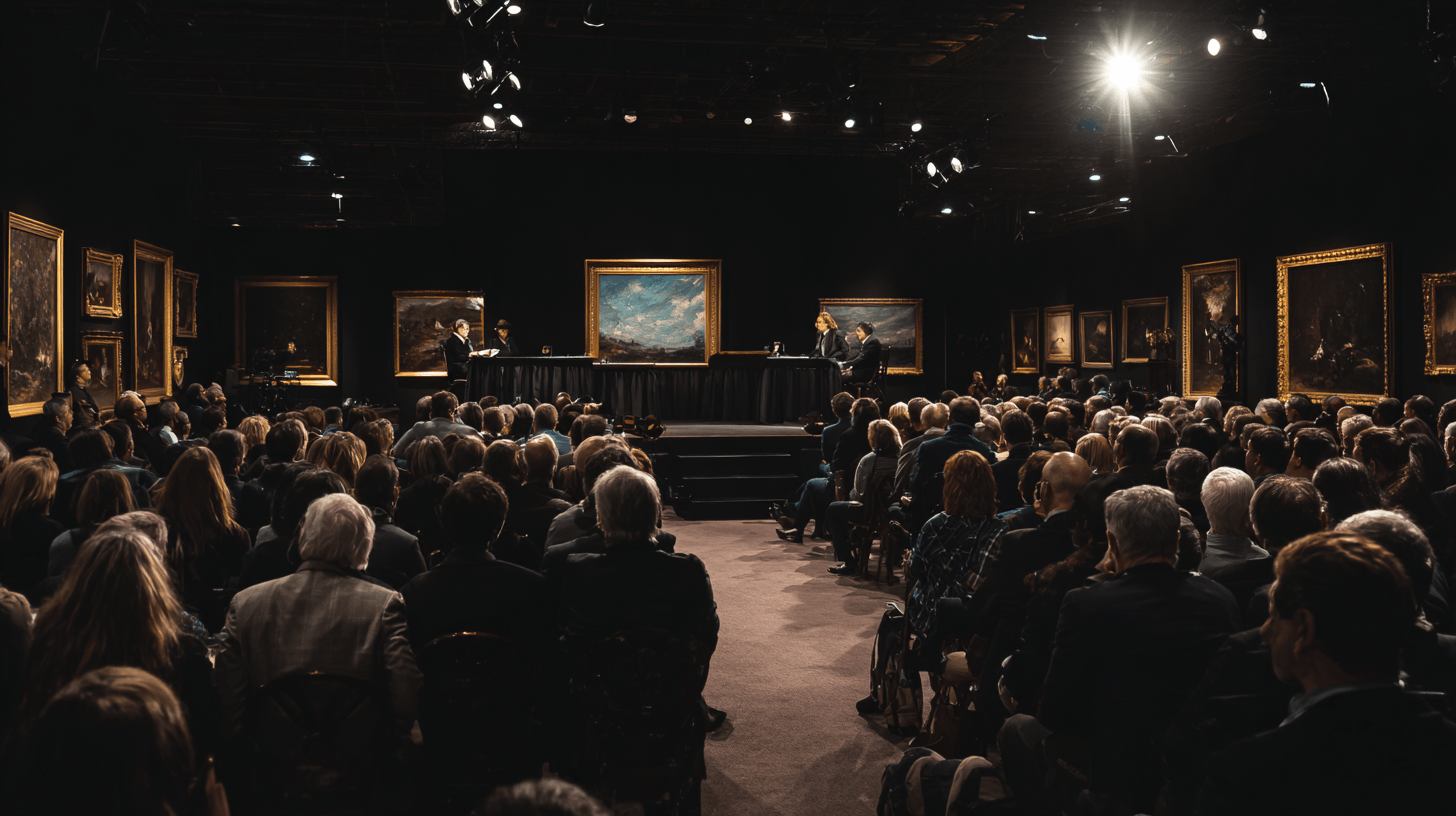
On a November evening in 2017, inside a packed Christie’s saleroom in New York, an auctioneer opened bidding on a small, cracked panel painting of Christ holding a crystal orb. Telephone bidders pushed the price past predictions within minutes. Bidders drove the price far above the $100 million Christie’s had expected for the last known privately owned painting by Leonardo da Vinci. By the time the hammer fell, Salvator Mundi had sold for $450.3 million, making it the most expensive artwork ever sold at auction. pressreader
The painting itself is unremarkable to look at: a 26-by-18-inch panel, damaged and heavily restored, of uncertain condition and disputed authorship. Only twelve years earlier, art dealers had bought it for roughly $10,000 as a curiosity worth studying rather than owning. Nothing about the physical object changed in the years between. What changed was everything around it. What a Portrait
That gap between the object and its price is the real subject of this article. Understanding why paintings sell for the sums they do means setting aside questions of beauty or skill and asking a more useful one: what, exactly, are buyers paying for?
A Market Where Nothing New Can Be Made
Ordinary markets respond to demand by producing more supply. Art markets at the top end cannot do this. There will never be another Leonardo, another Vermeer, another qualifying Rembrandt from the artist’s most celebrated period. The number of paintings from a given artist’s key years is fixed, and it can only shrink, never grow, as works are damaged, lost, or locked permanently into museum collections.
This creates a market structure closer to rare real estate than to any consumer good. When a handful of collectors and institutions all want a category of asset that literally cannot expand, prices are set not by cost of production but by how much the wealthiest interested buyer is willing to spend to avoid losing the item to someone else. Auction houses understand this dynamic and design sales around it, deliberately limiting supply by offering only one or two major “trophy” lots per season rather than flooding the market.
Scarcity alone doesn’t explain the size of the numbers, though. Thousands of paintings are equally irreplaceable and sell for a fraction of the price. The difference lies in a second, less visible commodity: the story that comes attached to the canvas.
What Provenance Actually Buys
In the art trade, provenance means the documented history of who owned a work, where it has been, and how its authenticity was established. For a painting entering nine-figure territory, provenance is not a footnote. It is close to the entire product.
Buyers at this level are not evaluating brushstrokes; specialists have typically already done that. They are buying a verified, litigation-proof claim that a specific object was made by a specific hand, has never been successfully disputed in court, and carries no risk of being reclaimed by a previous owner, a government, or an heir. Salvator Mundi’s own history includes centuries in which its whereabouts were entirely unknown, followed by rediscovery, restoration, and years of scholarly argument over how much of the panel Leonardo actually painted himself. That uncertainty depressed its value for decades. Once major museums and scholars were willing to attach Leonardo’s name to it publicly, the same physical object became, in market terms, a different asset altogether. What a Portrait
Condition matters for similar reasons. A painting that has survived five centuries without significant loss of surface, or one that has been in a small number of documented collections rather than passing anonymously through decades of unclear ownership, commands a premium that has nothing to do with how it looks and everything to do with how safely it can be resold.
The Buyers Behind the Bids
Paintings at this price level are not purchased by art lovers browsing a gallery. They are purchased by a narrow population of billionaires, sovereign wealth funds, and a small number of museums with extraordinary acquisition budgets, and the identity of the buyer is frequently concealed behind an intermediary or a numbered paddle. The eventual buyer of Salvator Mundi was an anonymous bidder later identified as acting on behalf of a Saudi prince connected to the country’s crown prince. What a Portrait
For this class of buyer, a record-breaking painting functions less like a decorative object and more like a diplomatic asset or a piece of national infrastructure. Owning, or being seen to acquire, the most expensive painting in history signals financial power on a global stage in a way that is instantly legible, even to people with no interest in art. Gulf states have used major acquisitions to seed new national museums and cultural institutions almost overnight; other buyers have used them simply to demonstrate that they can outbid anyone else in the room.
This is a market, in other words, where the price is partly a function of what the purchase communicates rather than what the object contains. Two identical paintings could sell for wildly different amounts depending entirely on who is competing to own them and what owning one is meant to prove.
Auction Houses as Engines of Value
Christie’s and Sotheby’s, the two houses that dominate this end of the market, are not neutral venues that simply record whatever price two bidders agree on. They actively manufacture the conditions for record prices.
Before a major sale, auction houses tour a headline painting through cities such as Hong Kong, London, and San Francisco, generating press coverage and allowing the small pool of realistic buyers to see it in person. Christie’s reported that roughly 27,000 people came to view Salvator Mundi before it went under the hammer, a public spectacle that had little effect on the eventual buyer but enormous effect on how the sale was covered and remembered. Houses also frequently offer guarantees, arrangements in which a third party agrees in advance to buy the work at a set minimum price, removing the risk of a public failure and giving bidders confidence that a serious floor already exists. pressreader
The estimates released before a sale matter too. A conservative pre-sale estimate, deliberately set below what the house privately expects, all but guarantees a dramatic bidding war and a headline about a painting selling for many times its projected value. That headline itself becomes part of the product, feeding the next record and the next news cycle.
Is Art Really an Investment?
The financial framing of art sales has become so common that paintings are now routinely described as an asset class, comparable to real estate or private equity. This is only partly accurate, and treating it as fully true can be misleading.
Publicly reported sale prices are reliable when they occur at auction, where results are disclosed by regulation. Many of the largest transactions in art history, however, happen privately, and here the record is far murkier. Willem de Kooning’s Interchange is reported to have sold for close to $300 million in a private deal, but because private sales carry no disclosure requirement, the figure comes from reporting rather than a confirmed salesroom record. The same is true of Paul Cézanne’s The Card Players, reportedly purchased by Qatar’s royal family, where the price is based on consistent reporting across multiple sources rather than a single verifiable transaction.
This matters because it means the widely cited “most expensive paintings” lists mix two very different kinds of evidence: hard auction results and estimated private prices that may be inflated, understated, or partly invented by parties with an interest in shaping the narrative around a sale. Art as an investment vehicle also carries costs rarely mentioned in these stories: insurance, climate-controlled storage, authentication disputes, and a resale market so illiquid that a painting can sit unsold for years if the small circle of qualified buyers loses interest.
What Popular Memory Gets Wrong
The common assumption is that the most expensive painting must also be the greatest, the most beautiful, or the most technically accomplished work in art history. This is not how the market actually functions.
Salvator Mundi itself illustrates the gap. Its authorship and the financial arrangements surrounding its record sale continue to raise unresolved questions among specialists, and serious scholars remain divided over how much of the panel Leonardo painted personally. A painting can hold the auction record while its authenticity is still actively debated, because the price reflects scarcity, provenance, and buyer competition rather than settled critical consensus. Many art historians would rank other, far less expensive works as more historically important or more technically extraordinary. The price tag measures what a handful of extremely wealthy bidders were willing to pay at one moment, not a stable judgment about artistic merit. Art Shortlist
Why the Numbers Keep Climbing
Records in this market have not simply risen steadily; they have moved in sharp jumps tied to when the pool of eligible buyers expanded. In 2004, Picasso’s Garçon à la Pipe sold for $104 million, breaking the previous 1990 record of $82.5 million set by a Van Gogh. Francis Bacon’s Three Studies of Lucian Freud pushed the record to $142.4 million in 2013, surpassing Edvard Munch’s The Scream, which had sold for $119.9 million the year before. Picasso’s Women of Algiers then reset the record again in 2015 at just over $179 million. Each jump tracked a broader shift: a growing global population of ultra-high-net-worth individuals, new wealth concentrated in the Gulf and parts of Asia, and auction houses actively courting that expanded buyer base.
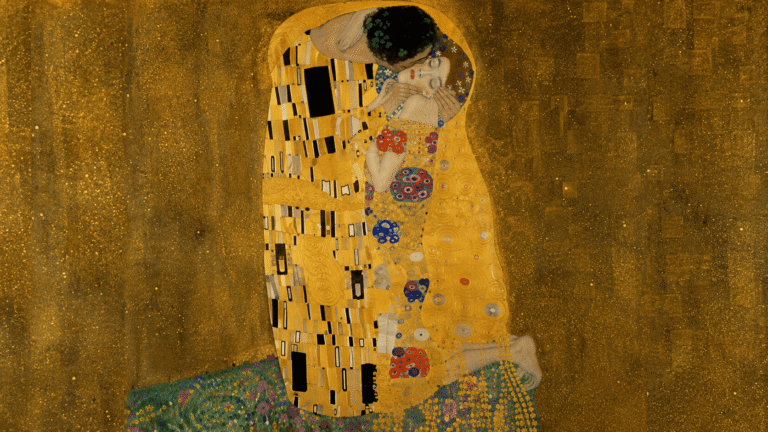
The most recent record shift confirms the pattern is still active. In November 2025, Gustav Klimt’s Portrait of Elisabeth Lederer sold for $236.4 million, resetting the second-highest auction result and setting a new record specifically for modern art. The Salvator Mundi figure has now held as the outright public auction record for nearly nine years, longer than any previous record, which may say less about that particular painting’s uniqueness than about how few objects exist that can plausibly attract the same concentration of ultra-wealthy competing bidders at once.
The Real Price of a Painting
A painting that sells for hundreds of millions of dollars is not being purchased for its pigment or its craftsmanship alone. It is being purchased as an irreplaceable, legally secure, globally recognized symbol of status, competing in a market with almost no normal supply-side check on price.
The next record will not be set because a more beautiful painting appears. It will be set when a painting with the right combination of scarcity, documented history, and public recognition happens to come up for sale at the exact moment two or three of the world’s wealthiest buyers decide they cannot afford to let the other one win.
Frequently Asked Questions
What is the most expensive painting ever sold?
Leonardo da Vinci’s Salvator Mundi holds the public auction record, selling for $450.3 million at Christie’s in New York in November 2017. Some private sales are reported at similarly high or even higher figures, but because private transactions are not required to be disclosed, those numbers cannot be independently confirmed with the same certainty. Masterworks Academy
Does the sale price reflect the painting’s artistic quality?
Not directly. Price reflects scarcity, documented ownership history, and competition among a small number of extremely wealthy buyers. Works whose price set records have sometimes had disputed or uncertain attribution, showing that market value and scholarly consensus about artistic merit can diverge sharply.
Why do private art sales sometimes report higher prices than public auctions?
Private sales are negotiated directly between a seller and buyer, often through dealers, with no legal requirement to disclose the final price. Reported figures for these deals come from journalists’ sources and market rumor rather than confirmed records, so they should be treated as estimates rather than verified facts.
Are these paintings a good financial investment?
They can appreciate significantly, but the market is highly illiquid, dominated by a tiny pool of qualified buyers, and burdened by real costs such as insurance, storage, and authentication. Treating a painting purely as a financial asset ignores the risk that a work may not find a buyer for years if collector interest shifts.