Why So Many Great Painters Found Fame Only After They Died
In March 1890, a Belgian painter named Anna Boch bought a landscape at an exhibition in Brussels for 400 francs, roughly $16 at the time. The artist who painted it, a socially awkward Dutchman living in the south of France, had made more than 2,000 paintings and drawings over the previous decade. That sale was the only one that can be confirmed to have happened while he was alive. Four months later, Vincent van Gogh was dead. Today, his paintings sell for tens of millions of dollars, and museums build entire wings around his name.
The story is often told as a simple tragedy: a misunderstood genius, ignored by a world too dull to see what was in front of it. That version is emotionally satisfying, but it isn’t quite the explanation. The real question is more interesting than “why didn’t people appreciate him?” It’s about how artistic reputation actually gets made — who controls it while an artist is alive, who takes it over after they die, and why those two processes can produce completely different verdicts on the same body of work.
Understanding that gap tells us less about bad luck and more about how taste, markets, and institutions interact — and why the pattern keeps repeating.
The Gatekeepers Who Decided What Counted as Great Art
For most of the 19th century, an artist’s success in France depended on one institution: the Salon, the official exhibition run by the French Academy of Fine Arts. Getting into the Salon meant sales, critical attention, and government commissions. Getting rejected meant near-invisibility, since there were few alternative venues where a painter could reach buyers or critics.
The Salon’s jury judged work against a fixed standard: smooth finish, mythological or historical subject matter, careful modeling of light and shadow in the tradition of painters like Jean-Auguste-Dominique Ingres. This wasn’t arbitrary snobbery. It reflected a coherent idea of what painting was supposed to do — elevate the viewer through noble subjects rendered with technical mastery.
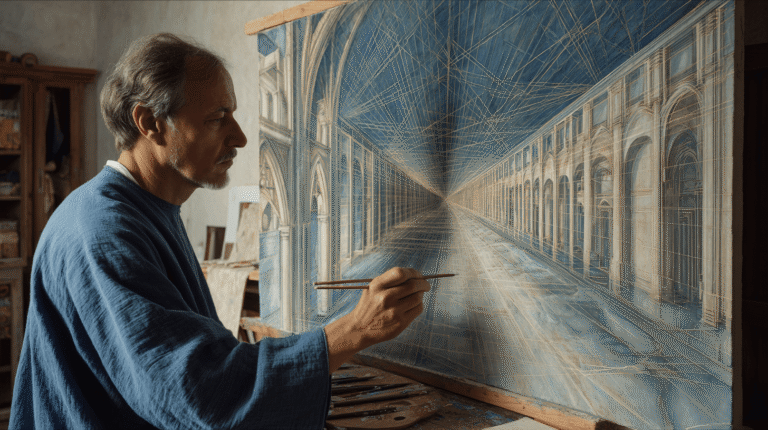
The problem was that this standard had almost nothing to say about what Van Gogh, or the Impressionists before him, were actually trying to do. Van Gogh wasn’t failing to meet the Salon’s standard. He was answering a different question entirely, one about color, emotion, and the texture of paint itself. Judged by the rules of the institution that controlled access to buyers, his work simply didn’t register as competent, let alone exceptional.
Innovation Looks Like Failure Before It Looks Like Genius
This is the pattern that recurs across nearly every case of posthumous artistic recognition: the artist wasn’t rejected despite being good. They were rejected because the thing that later made them important — a new way of using color, or light, or space — was, at the time, indistinguishable from a mistake.
Contemporary critics who saw Van Gogh’s work described it in terms that now sound absurd, but made sense within the vocabulary available to them. Thick, visible brushstrokes read as clumsy technique rather than deliberate style. Intense, non-naturalistic color read as an inability to render the world accurately rather than an attempt to express something the world doesn’t literally show. The eye has to be trained to see a new visual language as language at all, rather than as noise.
This is not unique to painting, and it is not unique to the 19th century. Nearly every genuinely new artistic movement — the Impressionists in the 1870s, jazz in the early 20th century, abstract expressionism after World War II — was first described by mainstream critics using words like ugly, unfinished, or incompetent. The audience capable of recognizing the new work as skillful rather than sloppy usually has to be built over time, often by people outside the institutions that originally rejected it.
Why Death Changes the Math
Here is the part of the story that rarely gets explained clearly: an artist’s death doesn’t just remove them from the scene emotionally. It changes the economic and narrative conditions around their work in very specific ways.
First, death fixes the supply. While an artist is alive, the number of available works keeps growing, which keeps prices low and collectors cautious about betting on long-term value. Once the artist dies, the body of work becomes finite. Scarcity is one of the most basic drivers of value in any market, and art is no exception.
Second, death makes the artist’s life available as a story. Dealers, critics, and biographers can now shape a complete narrative — struggle, misunderstanding, tragedy, vindication — that is far more compelling than the messy, unresolved reality of a living career. Van Gogh’s brother-in-law and later his sister-in-law, Johanna van Gogh-Bonger, spent years after his death organizing his letters and paintings and placing them with galleries and museums, effectively building the reputation that the art market later confirmed. The paintings didn’t change. The context around them did.
Third, death removes the artist as a competing voice. A living painter can undercut their own mythology by being difficult, inconsistent, or simply present in ways that complicate a clean story. A dead one cannot. Critics and dealers are free to construct the most useful version of the artist’s significance without contradiction.
None of this means the paintings weren’t good while the painter was alive. It means the mechanisms that convert quality into recognition — scarcity, narrative, institutional endorsement — mostly only start working after death.
The Case of the Painter Nobody Remembered
Van Gogh’s story involves being actively rejected. A different and in some ways stranger case is Johannes Vermeer, the 17th-century Dutch painter now famous for Girl with a Pearl Earring and View of Delft. Vermeer wasn’t rejected. He was simply forgotten.
During his lifetime, Vermeer had a modest, respected local reputation in Delft. He wasn’t obscure by the standards of his own city, but he worked slowly, produced few paintings, and never achieved wide fame beyond it. After he died in 1675, leaving his wife and eleven children in serious debt, his paintings scattered into private collections, and his name largely disappeared from art history for nearly two centuries.
Vermeer’s rediscovery is credited largely to the French critic Théophile Thoré-Bürger, who became fascinated by his work in the 1840s and spent roughly two decades tracking down paintings scattered across European collections, publishing his findings and effectively reconstructing an artist that art history had lost. Thoré-Bürger’s interest had been sparked after he saw Vermeer’s View of Delft on a visit to Dutch museums in 1842, and he spent years afterward searching archives and private collections for more of the painter’s work.
Vermeer’s case shows that “unrecognized in life” and “unrecognized ever, until rediscovery” are actually two different problems. One is about contemporary taste rejecting new work. The other is about how fragile reputation can be without institutions actively maintaining it — no textbooks, no museum retrospectives, no dealers keeping a name alive. Without someone doing that work, even genuine skill can simply vanish from cultural memory for generations.
What Popular Memory Gets Wrong
The tidy version of this story — brilliant outsider, cruelly ignored, vindicated by history — flattens a much messier reality, and it’s worth being precise about where the myth overreaches.
Not every celebrated painter was a failure in their own time. Rembrandt was wealthy and celebrated for much of his career before later financial troubles. Titian died rich and internationally famous. The “unrecognized genius” story gets applied retroactively to cases that don’t really fit it, because it’s a satisfying narrative that flatters both the artist and the audience discovering them.
It’s also worth resisting the idea that rejection by contemporaries is itself proof of genius. Most artists who were ignored in their lifetimes were ignored because their work genuinely wasn’t distinctive, not because they were secretly ahead of their time. Van Gogh and Vermeer are remembered precisely because they are exceptions that later evidence — technical innovation, influence on later artists, sustained scholarly attention — bears out. The pattern only becomes meaningful when it’s confirmed by something more than the fact of having been overlooked.
Why This Still Happens
The specific mechanisms have changed, but the underlying dynamic hasn’t disappeared. Contemporary art still runs through a small number of gatekeepers — major galleries, a handful of influential critics, a limited circuit of biennials and auction houses — whose collective judgment can make or break a career regardless of the work’s ultimate historical importance.
Art historians and market researchers have also observed that the contemporary art market rewards easily marketable, previously established names disproportionately, making it structurally difficult for genuinely unfamiliar work to break through no matter its quality. Museums and dealers have financial incentives tied to reputations they’ve already built, which makes them cautious about backing something that doesn’t fit an existing narrative. It’s not a conspiracy. It’s closer to a structural bias built into how attention, capital, and institutional endorsement move together.
Digital platforms have somewhat loosened the old gatekeeping model by letting artists reach audiences directly, but they’ve introduced new bottlenecks of their own — algorithms, virality, and platform economics that reward very different things than technical or conceptual originality. The problem of recognition lagging behind quality hasn’t been solved. It has simply changed shape.
Conclusion
The question “why weren’t great painters recognized in their lifetimes?” assumes a single failure — bad taste, cruel indifference, an unlucky era. The more accurate answer is that recognition was never really about taste alone. It depended on institutions built to reward one kind of work, on markets that only reward scarcity once supply stops growing, and on stories that can only be finished once a life is over.
Van Gogh didn’t fail to convince the world he was a great painter. He ran out of time before the machinery that turns painting into reputation had any reason to start working on his behalf. Vermeer didn’t fail either — he simply had no one keeping his name alive until a stranger, two centuries later, decided he was worth finding again.
What both cases reveal is less about genius going unnoticed than about how much of what we call artistic greatness is actually built after the fact, by people who never met the artist at all.