What Is a Server? The Computer That Works So Yours Doesn’t Have To
Open a food delivery app, and within seconds a stranger’s kitchen half a mile away knows to start cooking. Send a text, and it appears on a friend’s phone across the ocean almost instantly. None of this happens because your phone is doing the work. Somewhere else, a different kind of computer is doing it for you.
That computer is called a server, and most people use the word constantly without ever picturing what it actually is. Ask someone to draw a server, and they might sketch a glowing cloud, a mysterious box in a windowless building, or nothing at all. The truth is both simpler and more interesting: a server is just a computer with a very specific job, and understanding that job explains how the entire internet actually functions.
This article answers a question that sounds basic but rarely gets a real answer: what is a server, mechanically, and why does almost everything you do online depend on one?
A Computer With One Job
A server is not a special category of hardware. In principle, any computer can be a server, including the laptop on your desk. What makes a computer a server is not what it’s made of, but what it’s built to do: wait for requests from other computers and respond to them.
Your personal computer is designed around you. It runs the browser you’re reading this in, the apps you open, the files you save. It mostly acts on its own behalf, at your direction.
A server is designed around everyone else. It sits quietly, often without a screen or keyboard attached, listening for messages that arrive over a network. When a message comes in—open this webpage, verify this password, retrieve this photo—the server processes the request and sends back an answer. It repeats this thousands or millions of times a day, for people it will never meet.
That distinction, more than any technical specification, is what separates a server from an ordinary computer. A server is a computer that has agreed, in effect, to keep working on other people’s problems around the clock.
The Model That Made the Internet Possible
This arrangement has a name: the client-server model. The “client” is the device making a request—your phone, your laptop, your smart TV. The “server” is the computer answering it. Almost everything you do online is a conversation between the two.
The idea took shape as computer scientists in the 1970s and 1980s worked out how to let machines on early research networks like ARPANET share resources instead of each computer trying to hold everything itself. Rather than every device storing every piece of information, a single machine could store it once and answer requests from many others. It was a shift from computers working in isolation to computers working in relationships, some asking, some answering.
That basic pattern—ask and answer—turned out to be flexible enough to support nearly every online service ever built. A search engine is a server answering the request “find pages about this term.” A bank’s app is a server answering “does this account have this much money in it.” A multiplayer game is a server answering “where is every other player right now, and where should they be next?”
What Happens When You Tap “Search”
To see the model in action, it helps to follow a single request from start to finish.
When you type a web address or tap a link, your device doesn’t know where the destination actually is. It first asks a directory service called DNS, essentially the internet’s phone book, to translate a readable name into a numerical address. That address points to a server somewhere, possibly thousands of miles away.
Your device then sends a request across that distance, hopping through a chain of network equipment until it reaches the right machine. The server receives the request, checks what’s being asked for, and often has to do real work to answer it: pulling information from a database, checking permissions, assembling a webpage on the spot rather than having it sit ready-made.
Once the server finishes, it sends the result back along a similar path, and your device turns that data into the page, video, or message you actually see. All of this typically happens in well under a second. The speed is easy to take for granted precisely because the process is invisible.
Not One Computer, But Many
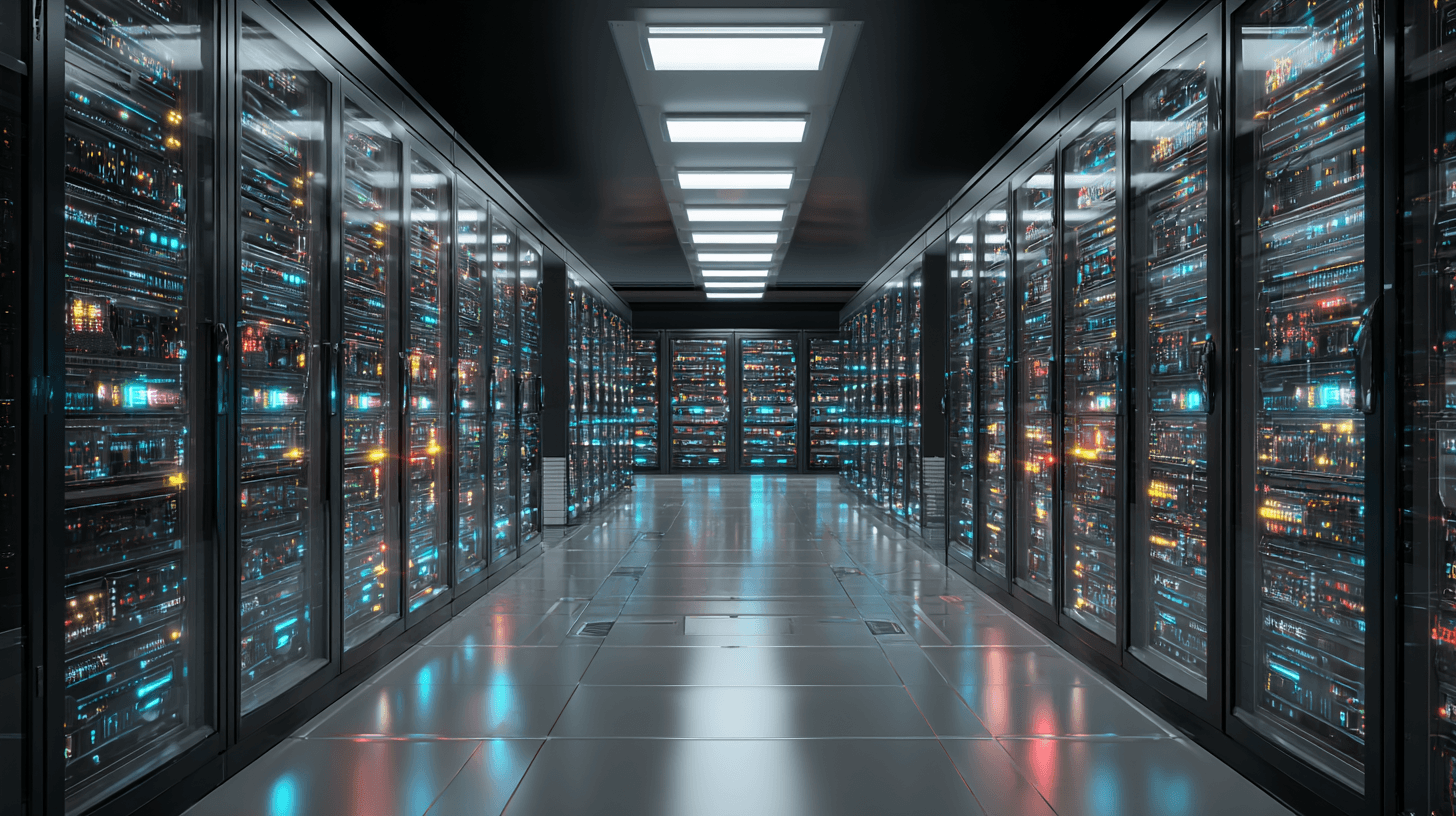
Popular services do not run on a single server. A company handling millions of users needs many servers working together, often organized into data centers: large facilities built specifically to house rows of server hardware, along with the cooling and power systems needed to keep them running.
This scale creates a problem a single server never faces: what happens if one machine slows down, fails, or is overwhelmed by traffic? The solution is redundancy. Requests are spread across many servers through a process called load balancing, so no single machine bears the full weight of demand, and no single failure takes an entire service offline.
Over the past two decades, this arrangement has itself become a product. Rather than every company building and maintaining its own data centers, businesses can rent server capacity from providers such as Amazon, Microsoft, and Google, paying only for the computing power they use. This is what “cloud computing” means in practice: not the absence of physical machines, but the renting of someone else’s.
The Myth of “The Cloud”
That last point is worth pausing on, because it corrects one of the most common misunderstandings about modern computing. The term “cloud” suggests something weightless, placeless, almost abstract. In reality, every file stored “in the cloud” sits on a physical hard drive, inside a physical server, inside a physical building, in an actual location on Earth.
Data centers are not small operations. They can span the size of several football fields and are typically located near cheap electricity and reliable cooling, since running thousands of servers continuously generates enormous heat. Estimates of how much electricity data centers consume worldwide vary depending on methodology and what is counted, but researchers broadly agree the figure is substantial and has been growing as demand for cloud services and, more recently, artificial intelligence computing has increased.
The convenience of the cloud comes from hiding this physical reality from the user, not from eliminating it. When a server fails during a storm, or a data center loses power, the outage that follows is a reminder that the internet still runs on machines, wires, and electricity, not on an abstraction floating somewhere above the ground.
Why Servers Sit at the Center of Modern Power
Because servers are physical, expensive, and essential, control over them has become a significant source of economic power. Building and running data centers at global scale requires enormous capital investment, specialized engineering, and long-term planning—resources only a small number of companies can commit at scale.
This is part of why a handful of firms dominate cloud computing today. Amazon Web Services, for instance, began as an internal solution to Amazon’s own need for scalable server infrastructure before becoming a business that rents that same infrastructure to other companies, eventually generating substantial revenue in its own right. The pattern repeats across the industry: whoever controls the servers controls a large part of what runs on top of them, from pricing to reliability to the pace at which new technology can be adopted.
This concentration is not merely a technical detail. It shapes which companies can afford to build ambitious software, how much smaller developers pay to reach users, and where global internet infrastructure physically exists—decisions made by a limited number of corporations headquartered in a limited number of countries.
What Servers Can’t Do
For all their importance, servers are not magic, and it helps to be clear about their limits.
A server is still a physical machine, and physical machines fail. Hard drives wear out, power supplies overheat, network connections drop. Redundancy reduces the risk of an outage, but it cannot eliminate it entirely, which is why even major platforms occasionally go dark for hours.
Servers are also finite. A server built to handle a certain volume of requests will slow down or stop responding if demand suddenly exceeds what it was designed for, which is why unexpectedly popular websites sometimes crash under a sudden flood of visitors. And because servers store other people’s data, they are also a natural target: much of modern cybersecurity is, at its foundation, the ongoing effort to keep unauthorized requests from being treated as legitimate ones.
None of this makes servers unreliable in any everyday sense. It simply means that the seamless experience of modern computing rests on infrastructure that requires constant, largely unseen maintenance to keep working as smoothly as it does.
Frequently Asked Questions
Is a server a different kind of computer than the one I use at home?
Not fundamentally. A server runs the same basic components as a personal computer—a processor, memory, storage—but is typically built for continuous operation, reliability, and handling many requests at once rather than for individual use.
Can my own computer act as a server?
Yes. Any computer connected to a network can be configured to respond to requests from other devices, which is exactly what a server does. Most people never do this because it requires constant uptime, security maintenance, and a stable internet connection that home setups rarely provide as reliably as dedicated data centers.
Why do companies rent servers instead of owning them?
Building and maintaining data centers is expensive and requires specialized expertise. Renting server capacity from a cloud provider lets companies pay only for the computing power they actually use, scaling up or down as demand changes, without the upfront cost of physical infrastructure.
Does “the cloud” mean there’s no physical hardware involved?
No. Cloud computing simply means renting server capacity owned by another company. Every file or service described as being “in the cloud” is stored on physical servers inside real data centers somewhere in the world.
The Machine Behind the Curtain
A server earns its name not through any special hardware, but through a role: a computer that agrees to keep answering, continuously, for people it will never see. That single arrangement—one machine listening, many others asking—turned out to be sturdy enough to support search engines, banks, hospitals, and social networks built decades after the idea first took shape.
The next time an app responds instantly to a tap, it’s worth remembering that the speed is not really coming from the device in your hand. It’s coming from a machine, in a building, somewhere on Earth, built for exactly that moment.