How a Rising Exchange Rate Quietly Reshapes Everyday Life
The Airport Sign Nobody Notices Until It Matters
For most people, exchange rates live in a strange kind of obscurity. They appear in tiny print at currency exchange counters, scroll past in the corner of financial news broadcasts, and get mentioned in headlines that sound important but distant. Then, one day, a grocery bill is higher than expected, a planned trip abroad suddenly costs much more, or a company announces layoffs tied to “currency headwinds.” Suddenly the exchange rate is not an abstraction. It is personal.
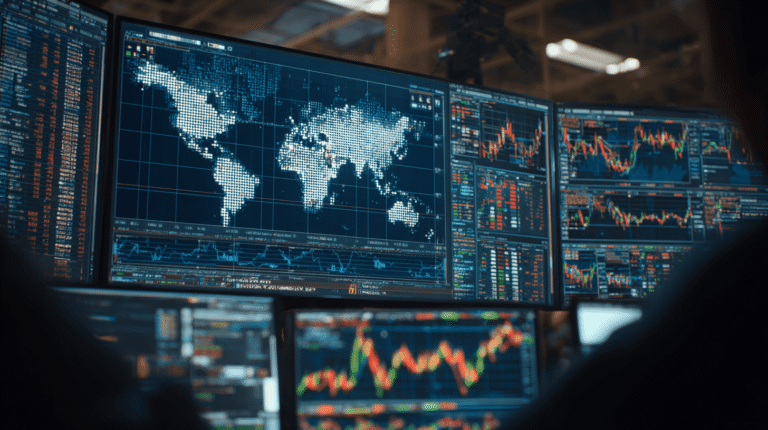
When a country’s currency weakens against major currencies like the U.S. dollar, economists call it depreciation. In everyday language, people often describe it as “the exchange rate going up,” because it now takes more of the local currency to buy one dollar. This single number, quietly recalculated every few seconds in global trading rooms, ends up touching an enormous number of ordinary decisions: what a family pays for imported food, whether a business can afford new equipment, how much a government spends servicing its debts, and whether a vacation abroad is still within reach.
The central question worth understanding is not simply that exchange rates move. It is how that movement travels from a trading screen into a household budget. The path is more direct, and more far-reaching, than most people assume.
What Actually Happens When a Currency Weakens
At its simplest, a currency’s exchange rate reflects how much of it people are willing to trade for another currency. When a country’s currency weakens, foreign goods, foreign travel, and foreign debt all become more expensive in local terms, while that country’s own exports become cheaper and more attractive to foreign buyers.
Several forces can push a currency down. Interest rates matter enormously: when a country like the United States raises interest rates while another country holds its rates steady, global investors often move money into the higher-yielding currency, increasing demand for dollars and reducing demand for the weaker currency. Trade balances matter too. A country that imports far more than it exports, especially energy and raw materials priced in dollars, tends to see steady downward pressure on its currency. Political instability, capital flight, and simple shifts in investor confidence can accelerate the process.
South Korea’s experience over the past several years illustrates how quickly this can unfold. South Korean authorities issued a rare warning after the won depreciated past the 1,400-per-dollar mark in 2024, a level not seen since late 2022. The pressure did not ease. By mid-2026, the won had weakened further, closing at levels not seen since the depths of the 2009 financial crisis, at one point falling below 1,500 per dollar. Behind that number were rising interest rates in the United States, capital flowing out of Korean markets, and elevated global oil prices that made the country’s energy imports more expensive still. None of that context appears on a grocery receipt. But its effects do.
The First Place People Feel It: Prices
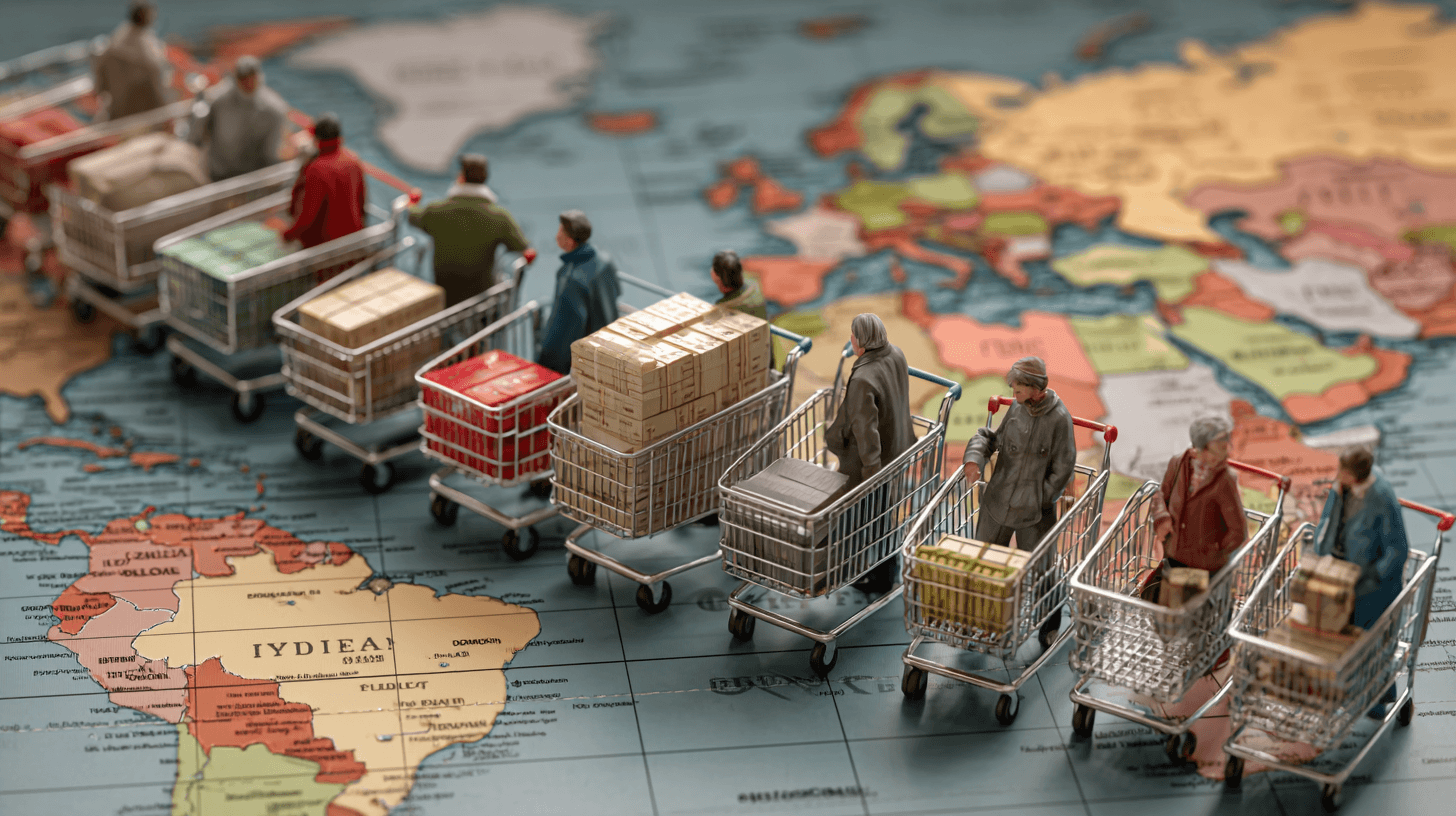
The most immediate and widespread effect of a weaker currency is imported inflation. Any product that relies on foreign components, foreign raw materials, or direct importing becomes more expensive to bring into the country, and that added cost typically flows through to the price a consumer pays.
Energy is usually the fastest transmitter. Oil is priced internationally in dollars, so a weaker local currency means paying more for the same barrel even if the global oil price has not changed at all. Higher fuel costs then ripple outward: shipping costs rise, manufacturing costs rise, and eventually the price of almost everything that has to be transported or produced using energy inputs rises with it.
Food often follows a similar pattern, particularly in countries that import a significant share of grain, coffee, cooking oil, or animal feed. A family may notice this first not through headline economic statistics but through smaller portions, quieter price increases at the supermarket, or the sudden disappearance of certain imported brands from store shelves as retailers adjust to costlier supply chains.
This is not evenly distributed pain. Lower-income households, who spend a larger share of their income on food and fuel, feel currency-driven inflation more acutely than wealthier households, who can absorb higher prices more easily and who are more likely to hold assets that benefit from currency depreciation, such as foreign stocks or property.
Travel, Education, and the Cost of Looking Outward
For anyone whose plans involve crossing a border, a weaker currency changes the math directly. A vacation priced in dollars or euros becomes noticeably more expensive when converted back into a depreciated local currency. Airlines, many of which price fuel and leasing costs internationally, often raise fares to compensate.
International education follows the same logic, and the effect can be severe because tuition and living costs are large, recurring, and usually fixed in a foreign currency. A student paying tuition in dollars while earning or saving in a weaker home currency can see the real cost of a degree rise substantially over the course of study, even if the tuition sticker price never changes. Families who budgeted carefully a year in advance can find themselves short by a meaningful margin simply because the exchange rate moved against them.
This dynamic also works in reverse for the country receiving foreign visitors and students. A weaker currency makes a country cheaper for foreign tourists and cheaper for foreign families sending students abroad, which is part of why struggling currencies are sometimes accompanied by tourism booms even as domestic households feel financial strain. The same number that hurts one group helps another.
Debt Denominated in a Foreign Currency Is a Different Kind of Risk
One of the more severe and less visible effects of currency depreciation involves debt. Governments, companies, and sometimes individuals borrow in foreign currencies, usually dollars, because those loans often carry lower interest rates or because international lenders prefer to lend in a currency they trust. This works well as long as the local currency stays roughly stable. When it weakens sharply, the real cost of repaying that debt increases, sometimes dramatically, even though the size of the loan in dollar terms never changed.
This is not a hypothetical risk. It was the central mechanism behind the 1997 Asian financial crisis, when countries including Thailand, Indonesia, and South Korea saw their currencies collapse against the dollar. Companies and banks that had borrowed heavily in dollars suddenly owed far more in local currency terms than they had originally borrowed, triggering a wave of bankruptcies, bank failures, and a deep regional recession. Understanding that crisis requires understanding this currency mechanism specifically. It was not simply that stock markets fell; it was that dollar-denominated obligations became unpayable once the exchange rate moved sharply against local currencies.
For an ordinary household, this rarely means holding foreign-currency debt directly, but it can mean working for a company that does, or living in a country whose government must divert more tax revenue toward servicing foreign obligations rather than funding public services.
Jobs, Exporters, and the Other Side of the Ledger
A weaker currency is not uniformly bad news. Exporters benefit because their goods become cheaper and more competitive on international markets without the company having to cut prices or margins. A South Korean electronics manufacturer selling semiconductors priced in dollars, for instance, earns more in won for every dollar of foreign sales when the won weakens, even if nothing about the product or the deal has changed.
This is why currency depreciation is sometimes deliberately tolerated, or even quietly welcomed, by governments trying to support export-driven industries and domestic employment. A country whose economy depends heavily on manufacturing exports may see job growth in factories and shipping even as consumers face higher grocery bills. This creates one of the genuine tensions in economic policy: the same exchange rate movement that squeezes household budgets can simultaneously support the jobs many of those households depend on.
Central banks have to weigh this trade-off directly. Raising interest rates can strengthen a currency and ease inflation, but it also raises borrowing costs for households and businesses and can slow economic growth. Letting the currency weaken supports exporters but risks inflation and financial instability if the decline becomes disorderly. There is no version of this decision that avoids trade-offs entirely.
What People Commonly Misunderstand
A common assumption is that a weak currency is simply bad and a strong currency is simply good. The reality is more conditional. A currency that is too strong can hurt exporters and widen trade deficits; a currency that weakens too quickly can spark inflation and financial instability. Most economists focus less on whether a currency is strong or weak in absolute terms and more on whether its movements are gradual and predictable or sudden and destabilizing. Sudden, sharp currency swings are almost always more damaging than steady, modest ones, regardless of direction.
Another misconception is that currency movements are driven mainly by a single country’s own economic performance. In practice, exchange rates are relative by definition, and a currency can weaken not because a country’s economy has deteriorated but because a stronger economy elsewhere, especially the United States, is pulling global capital toward it. Korean won weakness through 2025 and into 2026 coincided with elevated global oil prices, capital outflows from Korean markets, and heightened geopolitical tension in the Middle East, factors largely external to decisions made inside Korea itself.
Why It Matters Beyond the Headlines
Exchange rates sit at an unusual intersection in economic life. They are set in global markets, shaped by decisions made in distant central banks and trading floors, yet they eventually determine something as intimate as what a family can afford to eat, whether a child can study abroad, and whether a local factory is hiring. Very few economic indicators travel that entire distance, from a number on a trading screen to a decision at a kitchen table, quite so directly.
Understanding this connection does not require becoming a currency trader. It requires recognizing that a rising exchange rate is not an isolated financial event. It is a signal moving through an economy, changing incentives for importers and exporters, borrowers and lenders, travelers and students, often in opposite directions at once. The people who understand that trade-off are better equipped to interpret the headlines, plan around currency swings rather than being blindsided by them, and recognize that a single number on a screen carries consequences reaching far beyond the trading floor where it was set.
A rising exchange rate rarely announces itself with clarity. It arrives instead as a slightly higher grocery bill, a slightly more expensive plane ticket, a slightly larger loan payment. The number moved somewhere far away. The consequences arrived close to home.