Why Cutting in Line Feels Like Breaking a Law
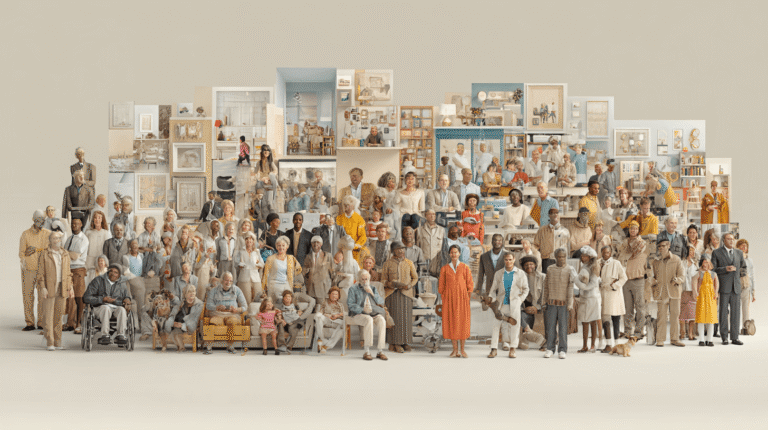
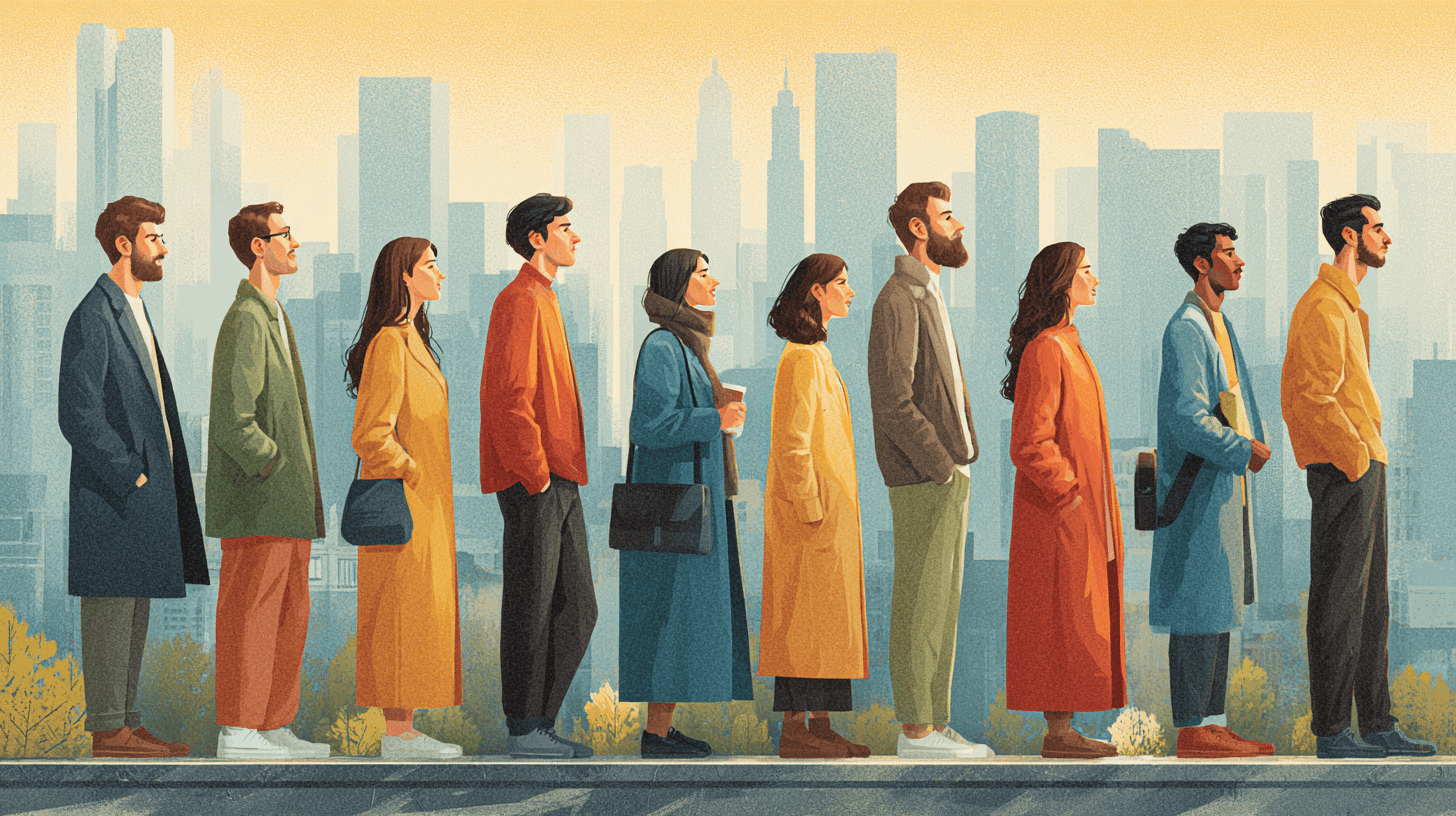
A stranger walks past forty people waiting outside a bakery and steps in near the front. No one raises a hand. No security guard intervenes. Yet within seconds, the mood of the entire line shifts—shoulders stiffen, eyes narrow, someone mutters just loud enough to be heard.
Nothing illegal has happened. No contract was signed, no official rule was broken. And still, the reaction feels almost moral, as if a small crime has occurred in public.
That reaction is the real subject of this article. Waiting in line is one of the most common experiences in modern life, yet it depends entirely on a rule nobody actually wrote down. Understanding why people enforce that rule so fiercely says less about queues themselves and more about how humans decide what counts as fair.
A Rule Nobody Wrote Down
A queue is a strange kind of order. It has no police, no judge, and no formal punishment for violators, yet it functions with remarkable consistency across airports, hospitals, coffee shops, and voting stations.
The principle behind it is simple: whoever arrives first gets served first. Economists call this a first-come, first-served system, and it is one of several ways a society can decide who gets a scarce resource when there isn’t enough for everyone at once. The alternatives include price, lottery, negotiation, or the authority of whoever is in charge.
Queuing survives because it asks for almost nothing except patience. It does not require money, status, or connections. That simplicity is part of why it feels fair even to people who have never studied fairness in their lives.
Why the Brain Treats Queue-Jumping as an Offense
The anger triggered by a line-cutter is not just irritation about losing a few minutes. Psychologists who study fairness argue that people react to queue violations the way they react to rule-breaking in general: with a mix of moral judgment and a sense of personal injury.
In the 1980s, the social psychologist Stanley Milgram and several colleagues conducted a notable field study on this exact behavior, sending researchers to deliberately cut into real waiting lines in New York City and observing how bystanders responded. The study found that intrusions provoked frequent objections, and that people standing directly behind the point of intrusion were far more likely to protest than those standing further away—suggesting that the sense of harm was tied to a specific, personal loss of position rather than an abstract principle.
That detail matters. A queue is not just a line of bodies. It is a sequence of individual claims, each one earned by waiting. When someone jumps ahead, they are not simply gaining a few minutes. They are taking something that another specific person believed had already become theirs.
This is closely related to what psychologists call equity theory: people are highly sensitive to the ratio between what they put in and what they get out, especially compared with others in the same situation. Waiting is an investment. A line-cutter changes the return on that investment for everyone behind them, and the brain registers that change almost instantly.
Fairness, Not Just Order
It would be easy to assume queues exist purely for efficiency, but that is not quite right. In many situations, a queue is actually slower and less efficient than alternatives like pricing or triage.
Emergency rooms do not serve patients in the order they arrive; they serve the most urgent cases first, because efficiency there means saving lives, not preserving fairness of arrival time. Airlines do not board passengers strictly by check-in time either. Yet in situations where the good being distributed is roughly equal in value to everyone—a coffee, a train seat, a concert ticket—queuing becomes the default, because it satisfies something people care about as much as speed: the feeling that no one used unfair advantages to get ahead.
This connects to a broader economic idea. The economist Gary Becker argued that time itself functions as a form of currency people spend to obtain things they want, especially when money alone cannot buy those things directly. A queue essentially converts time into a form of payment. Everyone pays with the same currency, at the same rate, regardless of income or influence.
That is why queue-jumping feels different from simply outbidding someone. It isn’t just about losing a place. It’s about someone refusing to pay the same currency everyone else agreed to use.
How Institutions Turned a Habit Into a Norm
Queuing as a widespread social behavior did not simply emerge from human nature. It grew alongside the institutions of modern urban life.
As cities expanded and services became centralized—public transportation, banks, government offices, large retail stores—more strangers needed to be served by a limited number of counters, doors, or vehicles at the same time. Waiting in a single ordered line was one of the few systems that could scale to handle large numbers of unrelated people without requiring anyone to know each other or negotiate individually.
Wartime rationing accelerated the habit further, particularly in twentieth-century Britain, where shortages during and after both World Wars made queuing outside shops a near-daily necessity. Orderly waiting was actively encouraged as a civic virtue during this period, reinforcing the idea that patience under scarcity was not just practical but honorable.
This history is often used to support the popular idea that queuing is a peculiarly British trait, tied to national temperament. That framing oversimplifies things. Queuing habits are shaped far more by institutional design, population density, and enforcement culture than by any inherited national character. Countries with strong public transit systems, dense urban centers, and consistent service infrastructure tend to develop strong queuing norms almost regardless of other cultural differences.
Not Everyone Waits the Same Way
Queuing norms are not universal, and treating them as instinctive human behavior misses important variation.
In many settings, waiting order is negotiated through group claims rather than strict individual arrival time—a family member holding a spot for relatives, or a shared understanding that certain groups move together. In markets with high uncertainty about supply, crowding rather than lining up can emerge as the dominant behavior, because a fixed line offers no guarantee that goods will still be available by the time a person reaches the front.
Researchers who study queuing across different societies generally avoid ranking these systems as more or less civilized. Instead, they describe them as different solutions to the same underlying problem: how to allocate something scarce among people who do not know each other and have no immediate way to negotiate directly. A rigid single-file line works well when supply is predictable and service time is short. It works far less well when goods might run out, when transactions vary wildly in length, or when trust in institutions to enforce order is low.
When Paying to Skip Breaks the Rule
Modern life has introduced a direct challenge to the fairness logic of queuing: the option to pay money to skip the wait entirely.
Airport security lanes, theme park ride reservations, and priority boarding all offer a faster path in exchange for a fee. These systems do not eliminate queuing; they simply create two parallel queues—one measured in time, the other in money.
This arrangement tends to provoke less anger than a stranger physically cutting in line, even though the practical outcome is similar. The difference lies in transparency and consent. A paid skip-the-line option is an openly stated rule that everyone can choose to use or ignore. A person cutting in line breaks a rule that others believed was mutually agreed upon without asking permission.
The tension has not disappeared, however. Surveys and public commentary regularly reveal discomfort with pay-to-skip systems, particularly in settings like healthcare or public services where equal treatment feels especially important. The closer a queue is tied to survival, health, or an essential right, the less comfortable people become with money replacing time as the currency of fairness.
What Popular Assumptions Get Wrong
A common assumption is that orderly queuing is simply a natural human tendency, something people default to whenever groups form. The evidence suggests otherwise. Queuing is a learned social technology, one that depends on trust that the system will be enforced, at least informally, by the group itself.
When that trust breaks down—during a sudden shortage, a natural disaster, or the collapse of public order—queues tend to dissolve into crowding remarkably quickly, even among people who queued calmly the week before. This shows that the line was never really about individual patience. It was about a shared belief that everyone else would follow the same rule.
Another common misconception is that anger over queue-jumping is irrational or petty. In reality, it reflects a fast, largely accurate detection of a fairness violation, the same mental system that flags cheating in games, unfair pay, or broken promises. The queue is a small, everyday laboratory for one of the oldest questions in human cooperation: how do strangers agree to share something scarce without a referee standing over them.
The Line as a Quiet Test of Trust
A queue looks like nothing more than people standing still. Underneath that stillness is a working agreement, renewed silently every time someone new joins the back of the line and accepts that their turn will come.
That agreement holds only as long as people believe it will be honored. The bakery line that erupts over a single line-cutter is not overreacting to a trivial inconvenience. It is defending one of the simplest and most fragile forms of fairness societies have ever built—one where the only thing anyone has to offer is their time, and where being made to wait a little longer is something almost everyone is willing to accept, as long as everyone else waits too.