Why Van Gogh Only Became a Genius After He Was Gone
The Math Behind a Myth
Vincent van Gogh produced more than 2,000 works of art in roughly a decade, most of them crammed into the final two years of his life. During that same stretch, the historical record shows him selling almost none of them. One sale, at a group exhibition in Brussels in 1890, is the only major transaction historians can confidently document. He died a few months later, at 37, essentially broke.
A century later, his paintings routinely sell for tens of millions of dollars. “Portrait of Dr. Gachet” fetched $82.5 million at auction in 1990. “Irises” sold for nearly $54 million in 1987. These numbers are often used as a punchline: the tortured genius nobody understood, vindicated by history. But that framing skips the more interesting question.
Van Gogh’s paintings did not improve after he died. His technique, his color theory, his compositions—all of it was already there, fully formed, while he was alive to see none of the reward. What changed was not the art. What changed was who was paying attention, and why.
Understanding that shift means looking past the myth of the misunderstood madman and toward something more specific: a set of overlapping failures in the art market of his time, a small circle of people who refused to let his work disappear, and an aesthetic revolution that eventually caught up to what he had already done.
An Artist Working Against His Own Market
Van Gogh did not start as a painter. He worked first as an art dealer, then briefly as a preacher, before turning to painting in his late twenties—late by the standards of the professional art world he was trying to enter. He was self-taught in large part, though not undisciplined. He studied anatomy manuals, copied prints by artists he admired, and worked through color theory with the seriousness of someone building a system rather than chasing inspiration.
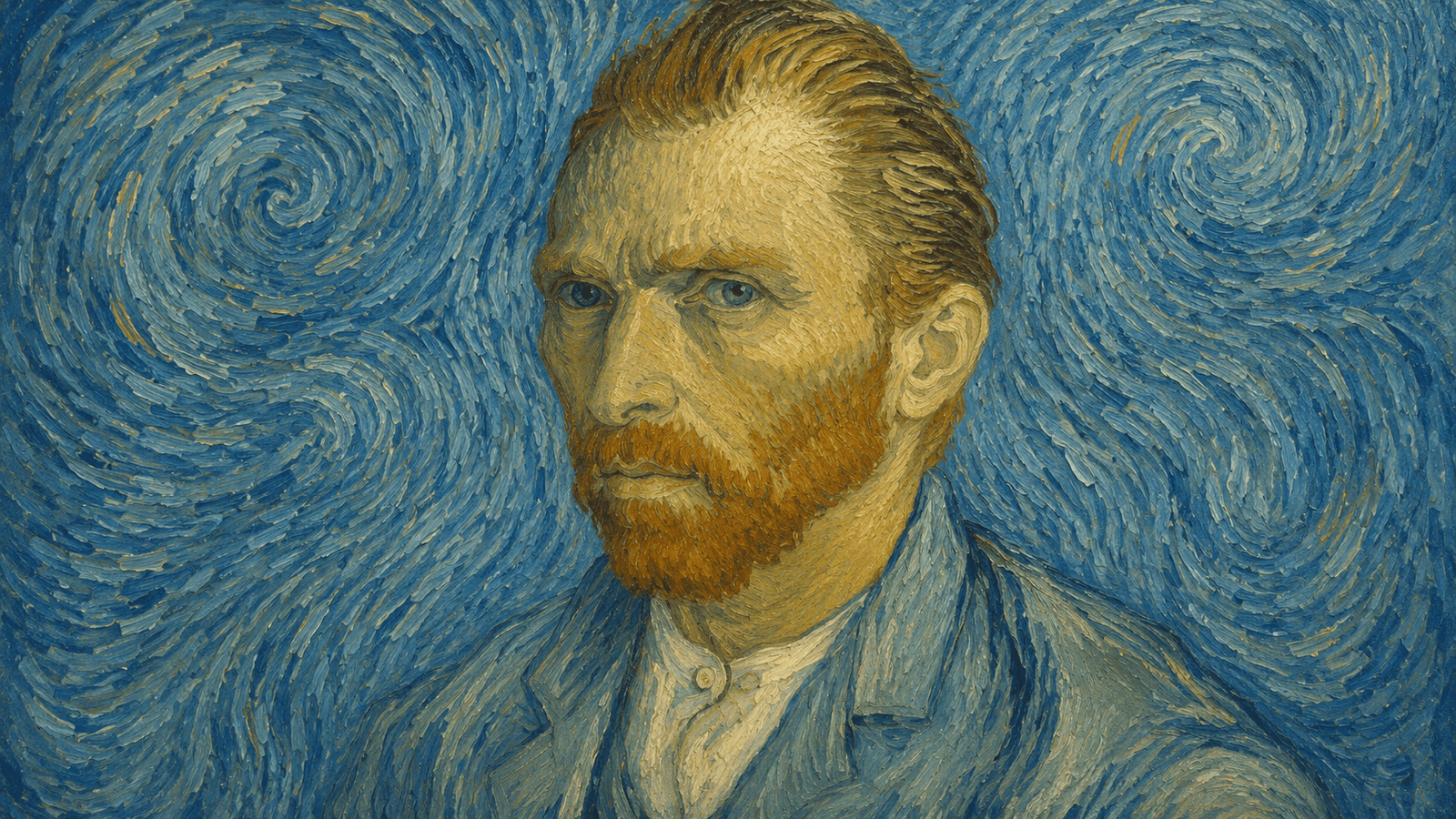
The Paris art market of the 1880s ran on a specific kind of taste. Academic painting, judged and sold through official Salons, still carried enormous prestige. Impressionism had only recently forced its way into acceptance, and even then largely through private dealers and independent exhibitions rather than institutional approval. Van Gogh’s mature style—thick, visible brushstrokes, colors pushed beyond naturalistic accuracy, compositions that prioritized emotional intensity over technical polish—sat outside what buyers, critics, and dealers were prepared to value.
This is not a case of talent going unnoticed by an indifferent universe. It is a case of a specific style arriving before the market had the vocabulary to price it. Dealers were reluctant to promote unfamiliar work. Buyers, especially the wealthy collectors who set prices, tended to prefer paintings that confirmed existing taste rather than paintings that challenged it. Van Gogh’s work did the opposite, consistently.
The Brother Who Kept Him Afloat
Van Gogh’s ability to keep painting at all depended almost entirely on his younger brother, Theo, an art dealer at the Paris gallery Goupil & Cie. Theo sent Vincent a monthly allowance for years, covering rent, paint, canvas, and food. In exchange, the two exchanged hundreds of letters—a correspondence that survives largely intact and remains one of the richest written records left by any painter, detailing not just Vincent’s daily life but his evolving thinking about color, composition, and the purpose of art.
Theo also tried, without much success, to interest Parisian buyers and fellow dealers in his brother’s work. He understood what Vincent was doing artistically better than almost anyone alive at the time. Understanding was not the same as selling. Theo’s professional position gave him access to the market, but not the leverage to redirect it toward an artist whose work looked, to contemporary eyes, unfinished or crude.
The financial support kept Vincent painting. It did not translate into public recognition, because recognition and patronage were never really the same problem. Theo could keep his brother alive as an artist. He could not, on his own, change what the market was willing to buy.
The One Review That Almost Arrived in Time
In January 1890, six months before Van Gogh’s death, the young critic Albert Aurier published an essay in the Paris journal Mercure de France titled “Les Isolés: Vincent van Gogh.” It was an unusually serious and admiring piece of criticism, praising Van Gogh’s use of color and describing him in terms that anticipated the language later generations would use about him.
This detail complicates the popular image of Van Gogh as someone universally dismissed during his lifetime. He was not famous. He was, by any commercial measure, a failure. But he was not entirely invisible to the avant-garde critical world that would eventually matter most. Aurier’s essay reportedly meant a great deal to him—by his own account in letters to Theo, it was both gratifying and slightly uncomfortable, since he worried the praise overstated his achievements relative to painters he admired, including Gauguin.
The timing is the tragedy here. Serious critical attention had begun, in a small but real way, before Van Gogh’s death. It simply had not had time to build into anything larger. He was not discovered posthumously so much as he ran out of time just as discovery was beginning.
Illness, Isolation, and a Death Still Debated
Van Gogh’s mental health crises are well documented, though the precise cause remains genuinely uncertain. He experienced severe episodes that led him to voluntarily admit himself to the Saint-Paul-de-Mausole asylum in Saint-Rémy-de-Provence in 1889, following the incident in Arles in which he injured his own ear during a psychological crisis involving a strained collaboration with Gauguin. Historians and medical researchers have proposed several possible explanations over the decades—among them bipolar disorder, temporal lobe epilepsy, and effects related to alcohol use and malnutrition—but no diagnosis commands full scholarly consensus, and Van Gogh himself was never formally diagnosed in terms that map cleanly onto modern categories.
He died in July 1890 near Auvers-sur-Oise, two days after being shot. The traditional account holds that he shot himself; a minority of historians, most notably biographers Steven Naifeh and Gregory White Smith, have argued for an alternative explanation involving an accidental shooting by others. Most historians continue to accept the suicide account, though the surviving evidence leaves some genuine ambiguity.
What matters for understanding his posthumous reputation is not resolving that debate but recognizing how it later shaped the myth. A sensational, tragic biography made for a compelling story once the paintings started attracting attention. It is worth being cautious here: the illness did not produce the art. Van Gogh’s technical skill was built through years of deliberate practice and study, and his most celebrated paintings were made during periods of intense, disciplined productivity rather than crisis itself.
The Widow Who Refused to Let the Work Disappear
Theo van Gogh died only six months after his brother, in January 1891, from a rapidly progressing illness. Responsibility for Vincent’s paintings, drawings, and hundreds of letters fell to Theo’s widow, Johanna van Gogh-Bonger, then in her late twenties with a young son to raise.
Jo Bonger did something no one else in Van Gogh’s circle had the means or motivation to do. She organized exhibitions of his work in the Netherlands and beyond, gradually placing paintings with galleries and collectors willing to take a chance on an unknown name. She also translated and published the brothers’ correspondence, giving the public direct access to Vincent’s own account of his artistic ambitions—an unusually intimate record that helped shape how audiences understood the paintings they were now, for the first time, actually seeing in quantity.
This work took decades, not months. Exhibitions in Paris and the Netherlands through the 1900s slowly built momentum. Without Bonger’s sustained effort, it is plausible that Van Gogh’s paintings could have remained scattered, undervalued, or simply lost. Reputation building, in this case, was not automatic. It was administrative, patient, and largely the achievement of one person managing an estate she had never expected to inherit.
Why Taste Finally Caught Up
The final piece of the puzzle is aesthetic rather than personal. In the years following Van Gogh’s death, European painting moved rapidly toward exactly the qualities his work had already displayed: intense, non-naturalistic color; visible, expressive brushwork; a prioritizing of emotional truth over photographic accuracy.
The Fauvist painters in France, including Henri Matisse and André Derain, and the German Expressionist group Die Brücke both cited Van Gogh as a direct influence in the early 1900s. What had looked crude or unfinished to a Salon-trained eye in 1888 looked, by 1905, like the origin point of an entire new direction in painting. Van Gogh had not changed. The standard by which his work was judged had.
This is the part popular memory tends to flatten into a single sentence—”he was ahead of his time”—without explaining what that actually means. It does not mean Van Gogh mystically anticipated the future. It means a specific, identifiable shift in European painting happened to move in the direction his work already occupied, and once it did, the paintings that had seemed strange suddenly seemed foundational.
What the Story Actually Explains
Van Gogh’s story is often told as proof that genius will eventually be recognized, given enough time. The more accurate lesson runs the other way. Recognition depended on a fragile chain of specific people and specific circumstances: a brother willing to fund years of unprofitable work, a critic who wrote one serious essay just months before it was too late, and a sister-in-law who spent decades of unpaid labor building an audience for paintings she had every reason to simply sell off and forget.
Remove any one of those links, and the outcome looks very different. There is no guarantee, in this story, that quality finds its audience. There is only a specific and somewhat improbable sequence of people who decided the work was worth the effort, arriving just as European taste was beginning to shift in a direction that made their effort pay off.
Van Gogh did not become a genius after his death. He had been one all along. What arrived later was simply an audience finally equipped to see it.