Why Recognition Feels Like a Basic Human Need
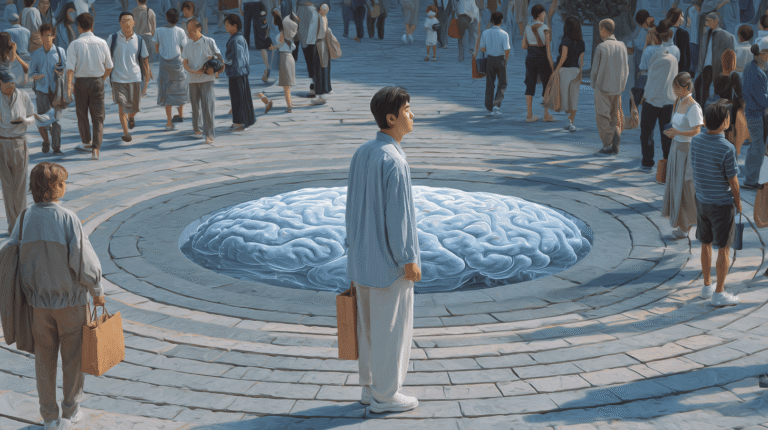
A promotion arrives, but the first thing many people do is check whether anyone else has noticed. A carefully worded text goes unanswered for hours, and the silence feels heavier than it should. A child holds up a drawing and asks not “is this good?” but “did you see this?” These moments are small, but they point to something large: human beings do not just want to survive or feel good. They want to be seen, and seen accurately, by other people.
This craving is so common that it rarely gets questioned. People assume it is simply vanity, insecurity, or a personality trait some individuals have more than others. But research in psychology and neuroscience suggests something more specific and more universal: the need for recognition is not a character flaw or a modern indulgence. It functions as a psychological system, one that evolved because being noticed and valued by others was once a matter of survival.
Understanding why recognition matters so much explains a wide range of ordinary behavior, from why criticism stings more than praise soothes, to why social media rewards keep so many people checking their phones. It also reveals where the need for approval turns from a healthy signal into a source of anxiety.
The Experience Almost Everyone Recognizes
Most people can recall a moment when their effort went completely unacknowledged. A project at work is finished and simply absorbed into someone else’s report. A joke lands in silence. A gesture of care goes unmentioned. The feeling that follows is not sadness in the ordinary sense. It has a distinct quality: mild but unmistakable discomfort, as if something did not close properly.
Psychologists describe this as a response to a threat against the social self, the part of identity that exists only in relation to other people. Unlike hunger or fatigue, this discomfort cannot be resolved by anything the person does alone. It requires another person’s attention, response, or acknowledgment. This is one of the clearest signs that recognition is not simply a preference. It behaves like a need with its own internal signal.
Why the Brain Treats Being Ignored Like an Injury
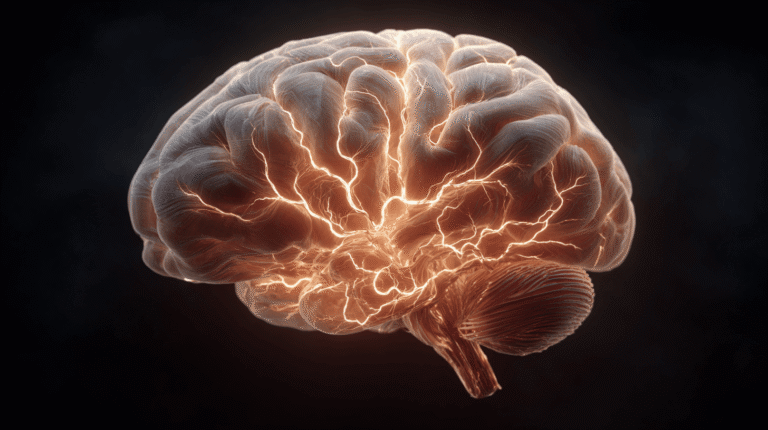
One of the more striking findings in social psychology comes from neuroscience research on social exclusion. Studies using brain imaging, most notably work led by psychologist Naomi Eisenberger, found that being excluded from a group activates regions of the brain associated with physical pain, particularly the dorsal anterior cingulate cortex. In other words, social rejection does not just feel bad in a metaphorical sense. It engages some of the same neural circuitry the brain uses to register a stubbed toe or a burn.
This overlap suggests that social pain evolved by borrowing the brain’s existing alarm system for physical injury. Pain, in evolutionary terms, exists to demand attention and change behavior. Applying that same mechanism to social exclusion made sense for a species that could not survive alone. A hunter-gatherer expelled from the group faced a level of danger comparable to a physical wound, sometimes greater.
Psychologist Mark Leary developed a related idea known as sociometer theory. According to this model, self-esteem is not primarily a judgment about personal worth. It functions as an internal gauge that tracks how much a person is valued and included by others. When that gauge drops, the feeling registers as low self-esteem, but the underlying signal is closer to a warning: your standing in the group may be at risk. Recognition, in this view, is not a reward. It is confirmation that the gauge is reading safely.
The Evolutionary Logic Behind the Need
For most of human history, group membership was not optional. Early humans lived in small bands where cooperation determined who ate, who was protected, and who survived difficult seasons. Being noticed and valued by the group was not about pride. It was about access to shared resources, protection, and future cooperation.
This is why recognition rarely feels satisfying when it happens in isolation. A person can accomplish something significant, but if no one registers it, the achievement can feel strangely incomplete. From an evolutionary standpoint, this makes sense. An accomplishment that goes unnoticed by the group does nothing to secure a person’s position within it. The brain seems to track not just what a person does, but whether that action registers in the eyes of others who matter.
This also explains why public acknowledgment often feels more powerful than private satisfaction, even for people who claim not to care what others think. The need is not fully conscious, and it does not disappear simply because a person intellectually values independence.
What Psychologists Mean by “Recognition”
The word recognition covers more ground than praise or applause. Psychologist Abraham Maslow placed esteem needs, which include respect from others, above safety and belonging in his well-known hierarchy of needs, arguing that people generally seek acknowledgment only once more basic needs are met. Later research complicated this strict ordering, showing that the need for esteem and belonging often operates alongside, rather than strictly after, more basic needs.
Self-determination theory, developed by psychologists Edward Deci and Richard Ryan, offers a more precise framework. It identifies three core psychological needs: autonomy, competence, and relatedness. Recognition touches at least two of these directly. Being acknowledged for a skill confirms competence. Being noticed and valued by others satisfies relatedness, the need to feel connected and cared for within a social world.
This distinction matters because it separates recognition from simple flattery. A person does not just want to be told they are good. They want their effort, skill, or identity to be perceived accurately by people whose judgment they trust. An unearned compliment rarely produces the same effect as genuine acknowledgment, because it fails to confirm anything real about competence or connection.
When the Need for Approval Becomes a Problem
A need that evolved for survival in small, stable groups now operates in an environment of unlimited audiences and constant feedback. Social media platforms convert recognition into a quantifiable signal: likes, views, comments, follower counts. These systems did not invent the need for approval, but they made it visible, measurable, and available at almost any hour.
The trouble is that this need does not have a natural stopping point built for this scale. In a small ancestral group, recognition came from a limited number of people whose opinions carried real consequences for survival. Online, recognition can come from thousands of strangers whose opinions carry no practical stakes at all, yet the brain often responds as if they do. This mismatch helps explain why some people report feeling worse after receiving attention online rather than better, particularly when the response falls short of what they expected.
At the individual level, an excessive reliance on external approval can develop into a pattern sometimes described as people-pleasing: shaping decisions, opinions, and even personality around the anticipated reactions of others. Left unchecked, this pattern can crowd out a person’s ability to know what they actually want, since so much psychological energy goes into predicting what others want to see.
What Popular Psychology Often Gets Wrong
A common assumption holds that wanting recognition is a sign of insecurity, while truly confident people do not need it. This framing is intuitive but misleading. Research on social needs suggests that virtually everyone is affected by recognition and its absence, including people who appear highly self-assured. What differs is not whether the need exists, but how a person manages it: how they seek acknowledgment, how they respond when it does not arrive, and how much their sense of self depends on it in any given moment.
Another common misconception treats recognition as inherently shallow or vain, distinct from more “serious” motivations like mastery or purpose. But the research reviewed above suggests recognition and competence are deeply intertwined. Wanting to be seen as skilled is not separate from wanting to develop real skill. In many cases, one reinforces the other, since accurate acknowledgment from others can be one of the clearest signals a person receives about their own progress.
Why This Extends Beyond Individual Psychology
The need for recognition shapes institutions as much as individuals. Workplaces that fail to acknowledge effort often see performance decline, not because employees are fragile, but because unacknowledged effort provides no confirmation that the work matters within the group. Educational systems that rely heavily on public ranking and comparison can intensify the need for recognition to an unhealthy degree, particularly when a student’s sense of worth becomes tied to a single test score or ranking.
At a broader level, understanding recognition helps explain long-standing social patterns, from why exclusion is used as a form of punishment across nearly every human culture, to why solitary confinement is considered one of the most psychologically damaging conditions a person can experience. The need to be seen by others is not a soft or secondary concern. It sits close to the center of how humans regulate their sense of safety and belonging.
What the Need for Recognition Really Tells Us
The desire to be recognized is not evidence of vanity or weakness. It is evidence of being human in a species that survived by cooperating, and whose brain still treats social standing as a matter connected to safety. The discomfort of being overlooked and the relief of being acknowledged are not incidental feelings. They are signals from a system built over a very long evolutionary history, one that still runs quietly beneath modern life.
Recognizing this changes how the need can be understood, even if it does not make the need disappear. The goal is not to eliminate the desire to be seen, which is neither possible nor necessary. It is to notice when that desire is guiding decisions in ways that serve genuine connection and competence, and when it has quietly become the only measure a person uses to know whether they matter at all.