How Stars Are Born, Shine, and Die
Every atom of calcium in your bones and every atom of iron in your blood was made inside a star that died before the sun existed. That is not a metaphor. It is a traceable chain of physical events, one that astronomers can reconstruct with remarkable precision: a cloud of gas collapses, a furnace ignites, the furnace eventually fails, and the wreckage seeds the next generation of stars and planets.
Stars look like fixed points of light, but they are not static at all. Each one is running a long, slow fight against its own gravity, a fight it is guaranteed to lose eventually. The only question is how the fight ends—and the answer depends almost entirely on one number: how much mass the star started with.
Understanding that single relationship between mass and fate explains almost everything else about stars: why some shine for billions of years while others burn out in a few million, why some end quietly and others end in an explosion visible across galaxies, and why the elements that make up planets and living things exist at all.
A Cloud of Gas Becomes a Furnace
Stars begin as almost nothing: thin clouds of hydrogen gas and dust drifting through a galaxy, so diffuse that by laboratory standards they would count as a near-vacuum. What turns that faint mist into a star is gravity, acting patiently over hundreds of thousands of years.
Within a large cloud, small variations in density mean some regions pull in slightly more surrounding gas than others. As those regions grow denser, their gravitational pull strengthens further, drawing in still more material. The process feeds on itself. A clump of gas that started out barely denser than its surroundings can collapse into a rotating sphere with a temperature of millions of degrees at its core.
Astronomers can watch this process happen today, using infrared telescopes to see through the dust clouds where new stars are forming, such as the Orion Nebula. These regions are essentially stellar nurseries, containing protostars at every stage of formation—some barely denser than the surrounding cloud, others already glowing from the heat of their own collapse.
Gravity alone, however, cannot make a star shine. Something has to stop the collapse and convert that gravitational energy into steady light. That something is nuclear fusion.
Why Gravity Needs an Opponent
At the center of a young protostar, pressure and temperature eventually reach a threshold—roughly 10 million degrees Celsius—at which hydrogen nuclei begin fusing into helium. This reaction releases an enormous amount of energy, and that energy pushes outward as heat and radiation.
For the first time, the collapsing cloud has an opponent to gravity. Fusion pressure pushes out; gravity pulls in. When the two forces balance, the star stops collapsing and settles into what astronomers call the main sequence—the stable, fuel-burning phase that accounts for most of a star’s life. The sun has spent about 4.6 billion years in this phase and will continue for roughly another 5 billion.
This balance is not dramatic to look at, but it is precise. A star in the main sequence is less like a fire and more like a controlled reactor, continuously converting mass into energy according to Einstein’s famous relationship between the two. The immense pressure at a star’s core does not simply burn hydrogen. It forces hydrogen nuclei to overcome their natural electrical repulsion and fuse together, a process that would be essentially impossible under ordinary conditions on Earth.
The Long Middle Age of a Star
How long a star can maintain this balance depends almost entirely on its mass, and the relationship is counterintuitive: more massive stars burn through their fuel much faster, not slower.
A star roughly ten times the mass of the sun has far more hydrogen available, but it fuses that hydrogen at a dramatically higher rate to support its greater weight. As a result, it exhausts its fuel in only a few million years rather than billions. A smaller star, by contrast, fuses hydrogen slowly and can remain stable for tens of billions of years—longer, in some cases, than the current age of the universe.
This is the first sign that a star’s death is written into its birth. Mass sets the pace of a star’s entire life, and it will also decide, in every meaningful sense, how that life ends.
What Happens When the Fuel Runs Out
Every star eventually reaches a point where the hydrogen at its core is largely converted to helium. Fusion at the core slows, and the outward pressure that had balanced gravity for so long begins to weaken. Gravity, which never stopped pulling, starts to win again.
What happens next depends on mass—but for every star, the immediate effect is surprising: the core contracts while the outer layers expand. The star does not shrink as it runs out of fuel; it swells into what is called a red giant, sometimes growing large enough to engulf its own inner planets. When the sun reaches this stage, it is expected to expand well beyond Earth’s current orbit.
From this point, stellar evolution splits into two very different paths.
Small and Medium Stars: A Quiet Retirement
For a star roughly the size of the sun or smaller, the ending is comparatively gentle. After a series of internal adjustments, the star sheds its outer layers into space, forming a glowing shell of gas known as a planetary nebula—a name that is a historical accident, since the phenomenon has nothing to do with planets. What remains is the star’s exposed core: an extremely dense, Earth-sized object called a white dwarf.
A white dwarf no longer generates energy through fusion. It simply radiates away its remaining heat over an immense span of time, cooling gradually rather than collapsing further, because a quantum-mechanical effect called electron degeneracy pressure holds it up against gravity. Given enough time—far longer than the current age of the universe—a white dwarf would eventually fade into a cold, dark remnant. None have had time to reach that point yet.
Massive Stars: A Violent End
For a star roughly eight times the mass of the sun or greater, there is no quiet retirement available. Electron degeneracy pressure is not strong enough to support a core of that mass, and the collapse continues past the white-dwarf stage.
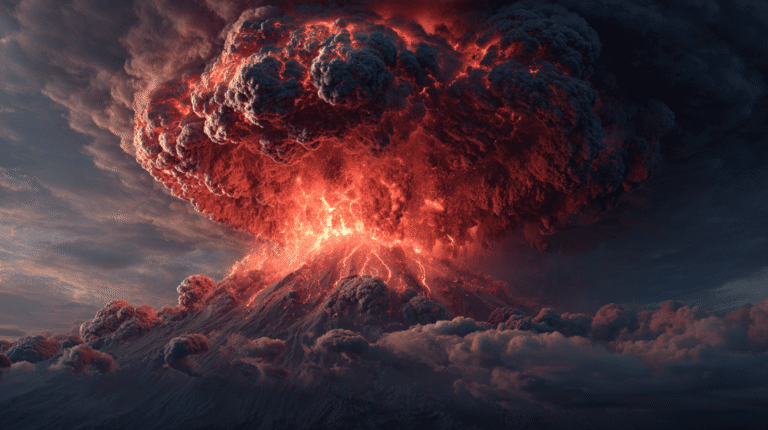
As the core collapses in on itself in a fraction of a second, its outer layers slam inward and then rebound violently outward in one of the most energetic events known in physics: a supernova. For a few weeks, a single exploding star can outshine its entire host galaxy. The explosion scatters the star’s outer material—including newly formed heavy elements—into interstellar space.
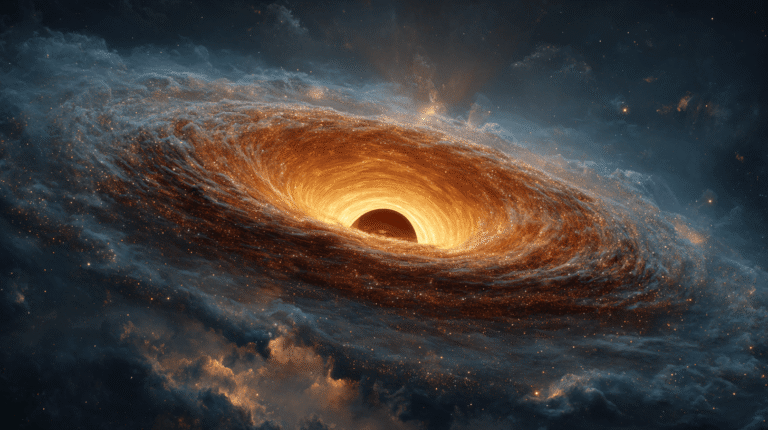
What remains at the center depends, again, on mass. A core between roughly 1.4 and 3 times the mass of the sun typically collapses into a neutron star, an object so dense that a teaspoon of its material would weigh billions of tons on Earth. A core above that threshold collapses further still, past any known force capable of stopping it, into a black hole—a region where gravity is strong enough that not even light can escape.
What Popular Memory Gets Wrong
Stellar death is often described in popular writing as if every star ends in a dramatic explosion. It does not. The vast majority of stars in the universe, including the sun, are far too small ever to become a supernova. Their fate is the slow, undramatic path toward a white dwarf.
There is also a common misconception that black holes actively pull in surrounding matter the way a vacuum cleaner does, consuming anything nearby. In reality, a black hole’s gravitational influence at a given distance is no stronger than that of any other object of the same mass. If the sun were somehow replaced with a black hole of identical mass, Earth’s orbit would be unaffected; only objects that come extremely close to a black hole’s boundary, known as the event horizon, are at risk of being pulled in.
A third misunderstanding involves timing. Supernovae are sometimes described as sudden, unpredictable events, and in a sense, they are—but the stars capable of producing them are also short-lived on cosmic timescales, meaning they tend to occur in regions of a galaxy where massive star formation is actively happening, not randomly throughout the sky.
Why Stellar Death Matters to Us
The most important fact about stellar death has nothing to do with drama and everything to do with chemistry.
Hydrogen and helium, the two lightest elements, were essentially the only elements produced by the Big Bang. Every heavier element—carbon, oxygen, nitrogen, silicon, iron, and beyond—was created later, inside stars, through nuclear fusion during their lifetimes or during the extreme conditions of their deaths. Elements heavier than iron, including gold and uranium, form almost exclusively in the violent aftermath of supernovae and the collisions of neutron stars.
This is the basis for the frequently repeated but genuinely accurate claim that living things are made of stardust. The calcium in bone, the oxygen in water, and the carbon in every organic molecule trace back to stars that lived and died long before the sun formed. The solar system itself, including Earth, condensed from a cloud enriched by the debris of earlier stellar generations.
A star does more than produce light for a portion of its life. It manufactures the raw material for everything that comes after it, then distributes that material across space through its own destruction. In an important sense, a star’s death is not simply an ending. It is the mechanism by which the universe builds anything more complex than hydrogen and helium.
The Central Insight
A star’s fate is set by a single number—its initial mass—long before that fate arrives. That number quietly determines how fast the star burns, how long it lasts, and how it eventually loses its decades-long standoff with gravity. Some stars fade into cold, dense remnants over spans of time longer than the universe has yet existed. Others end in an explosion capable of forging the heaviest elements in nature and briefly outshining every other star in their galaxy combined.
What connects both outcomes is the same physical law: fusion cannot hold back gravity forever. Every star is, from the moment it ignites, counting down toward an ending that its own mass has already chosen.
The sun, viewed from that perspective, is not simply a source of daylight. It is a five-billion-year-old furnace, roughly halfway through a fight it will eventually lose—slowly, and without violence, but just as certainly as any star that ends in fire.