Why Stress Hits Your Heart and Stomach Before It Hits Anything Else
Someone waiting to walk into a job interview often notices two things happening at once: a heartbeat that feels too loud for the room, and a stomach that seems to have tied itself in a knot. Neither sensation shows up on a blood test. Neither has an obvious physical cause. And yet both are unmistakably, uncomfortably real.
This is one of the stranger puzzles of human biology. Stress begins as a thought — a worry, a threat, an anticipated failure — yet the body responds as though something is physically attacking it. The chest tightens. The gut rebels. People describe “stomach-churning” news or a “heart-stopping” moment, and the language is not just metaphor. Something in the nervous system is translating a psychological event into a physical one, and it is doing so through two of the most tightly wired organs in the body.
Understanding why the heart and stomach take the brunt of stress means understanding a much older story: how the body built an emergency response system millions of years before anyone had a mortgage payment or a performance review to worry about, and why that system still runs the show today.
The Alarm System the Brain Never Turned Off
Every stress response begins in the same place: a threat assessment center deep in the brain, built for a world of predators and physical danger. When the brain interprets something as a threat — a snarling animal or an unpaid bill makes little difference to this system — it activates two responses simultaneously.
The first is fast. Within seconds, the sympathetic nervous system fires a signal to the adrenal glands, which release adrenaline into the bloodstream. This is the body’s rapid-response mechanism, and it produces the sensations most people associate with acute stress: a racing pulse, quickened breathing, sharpened senses, tensed muscles. This activation triggers fight-or-flight responses to stress, such as accelerated heart rate and breathing, preparing the body to confront or escape danger.
The second response is slower but longer-lasting. It runs through what scientists call the hypothalamic-pituitary-adrenal axis, or HPA axis — a chain of communication between three organs that ends with the release of cortisol, the body’s primary stress hormone. Cortisol prompts the liver to release blood sugar so the body has fuel to cope with an ongoing stressor, but over the longer term this same response can contribute to high blood pressure, irregular heartbeat, disrupted sleep, and digestive problems.
Neither of these systems was designed with modern life in mind. They were built to handle brief, physical emergencies: outrun the predator, survive the encounter, then stand down. The trouble is that this ancient hardware cannot distinguish between a genuine physical threat and a stressful email. It reacts the same way to both.
Why the Heart Takes the First Hit
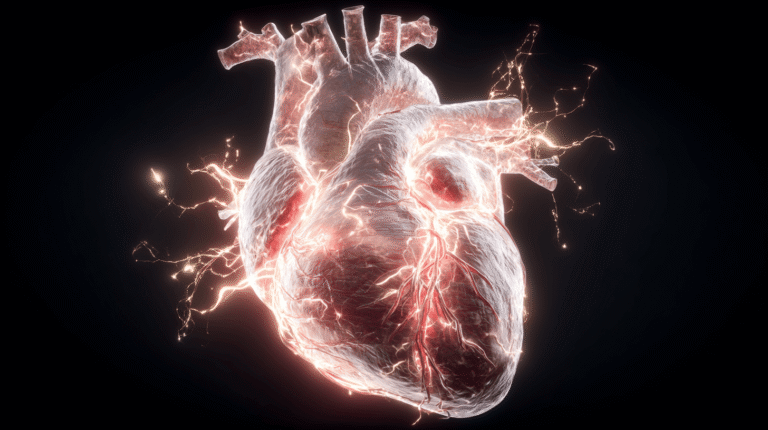
The heart is wired directly into this alarm system, which is why it tends to be the first organ a person notices reacting to stress. When the brain detects a threat, it triggers the release of hormones like adrenaline into the blood, increasing the respiratory rate, heartbeat, and oxygen supply to the tissues. This is not a malfunction. It is the cardiovascular system doing exactly what it evolved to do: pump more blood, faster, to the muscles that might need to run or fight.
The problem is one of degree and duration. A short burst of adrenaline is harmless and even useful. But when stress is severe, sudden, or chronic, the same mechanism can push the heart past what it can comfortably handle.
The clearest illustration of this is a condition doctors call takotsubo cardiomyopathy, more commonly known as “broken heart syndrome.” It typically strikes after an intense emotional shock — the death of a loved one, a sudden shock, or acute fear — and it can produce chest pain and heart failure symptoms that mimic a heart attack. Researchers believe the condition develops when severe stress overactivates the sympathetic nervous system, flooding the heart with catecholamines at levels toxic enough to temporarily stun the heart muscle. The exact mechanism is still being studied, and the precise brain-heart pathway involved remains only partly understood, but the broader pattern is well established: intense psychological distress can produce measurable, sometimes dangerous, physical effects on the heart.
Chronic, lower-grade stress works on a longer timeline but through a related pathway. Instead of one dramatic surge, the body experiences repeated, smaller waves of adrenaline and cortisol that never fully settle, gradually straining blood pressure regulation and heart rhythm over months or years rather than minutes.
The Second Brain Living in the Gut
If the heart’s reaction to stress is fast and dramatic, the stomach’s reaction is slower and stranger — because the gut is not simply a passive organ waiting for orders from the brain. It has its own nervous system, sometimes called the “second brain,” made up of hundreds of millions of neurons embedded in the walls of the digestive tract. This is the enteric nervous system, and it can operate independently of the brain even as it stays in constant conversation with it.
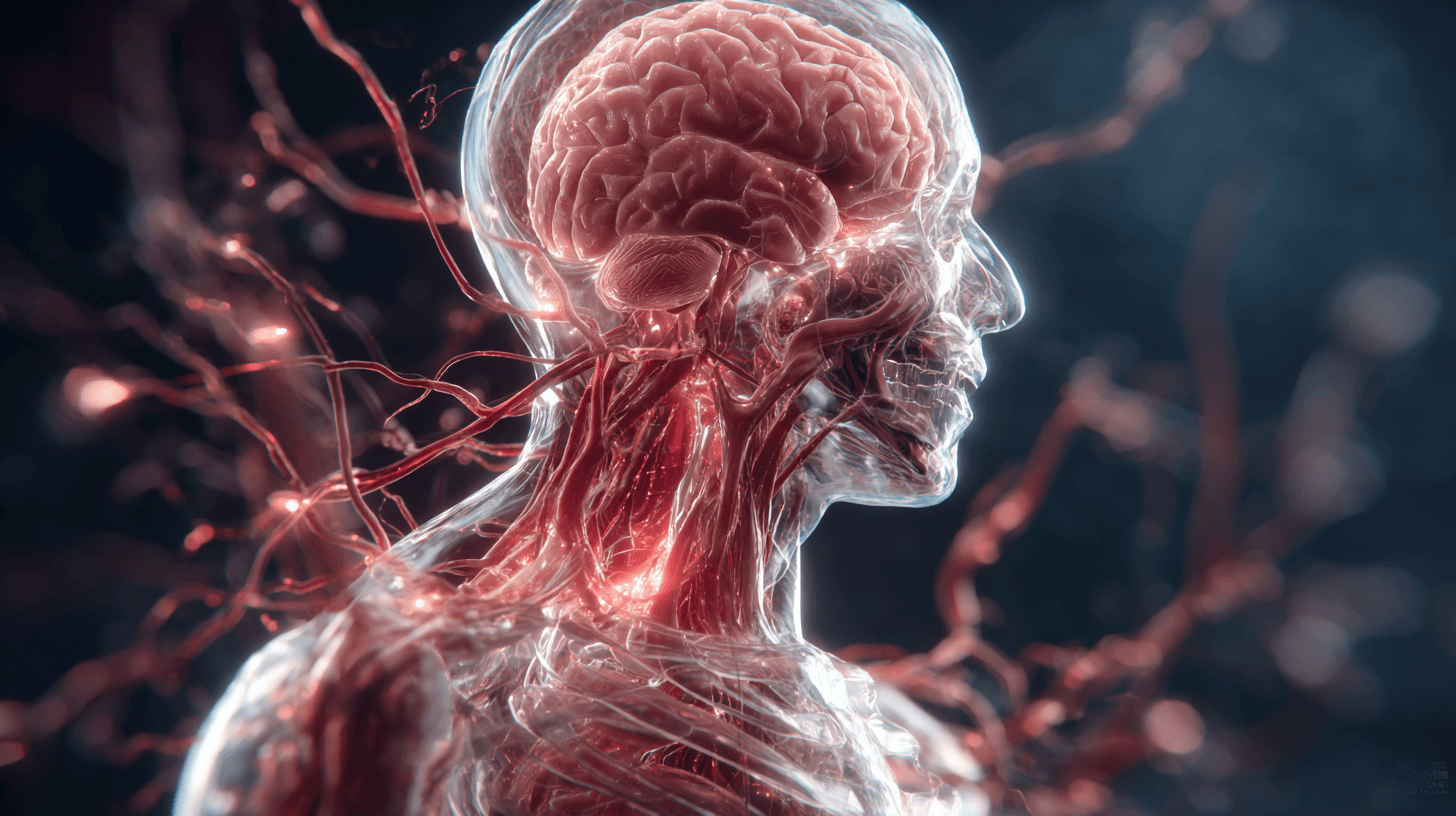
That conversation happens largely through the vagus nerve, the longest cranial nerve in the body, which runs from the brainstem down through the neck and chest to the gut. The vagus nerve extends to major organs, including the heart, lungs, and gastrointestinal tract, where it communicates in two directions to regulate heart rate, blood pressure, digestion, and inflammation. Roughly eighty percent of the signals traveling along it run from the gut up to the brain, not the other way around — meaning the stomach is constantly reporting its state to the brain, and the brain is constantly adjusting the gut in response.
This is why stress hits digestion so directly. Under threat, the body diverts blood and energy away from digestion and toward the muscles and brain, since digesting a meal is not useful in an emergency. Vagal afferent fibers in the intestine carry this information back to the central nervous system, and the result is a gut that slows down, speeds up, or becomes unusually sensitive, depending on the person and the type of stress involved.
Researchers studying irritable bowel syndrome, or IBS, have found this connection is not incidental. Studies have consistently found high levels of emotional distress among a portion of patients with IBS and other functional gastrointestinal disorders, and psychosocial disturbances often appear to precede a flare-up of symptoms rather than follow it. Stress appears to inhibit healthy vagus nerve function and has damaging effects on both the gastrointestinal tract and the community of bacteria living there, which may help explain why anxious periods so often coincide with digestive upset, even in people who show no other signs of illness.
What Popular Understanding Gets Wrong
A common misconception is that stomach and heart symptoms caused by stress are somehow less real than symptoms with a clear physical cause — that they are “all in someone’s head” and therefore less worthy of concern. The evidence points in the opposite direction. The pathways involved are physical, measurable, and, in some cases, capable of producing outcomes as serious as heart failure.
The reverse misconception is just as common: assuming that every episode of chest tightness or stomach pain during a stressful period must be stress-related, and nothing else. This assumption can be dangerous. Chest pain in particular can indicate cardiac events unrelated to stress, and digestive symptoms can stem from conditions that have nothing to do with a person’s emotional state. Researchers who study conditions like IBS are careful to note that stress is one contributing factor among several, including genetics, gut inflammation, and the composition of gut bacteria — not a single, complete explanation for why symptoms occur.
There is also a tendency to treat stress-related physical symptoms as a modern problem, born of overwork and inboxes. In truth, the systems responsible — the sympathetic nervous system, the HPA axis, the enteric nervous system — evolved long before anything resembling modern life existed. What has changed is not the machinery but the kind of threats it now has to interpret: threats that rarely resolve in minutes, and that the body cannot outrun or fight.
Why the Connection Still Matters
The link between stress and the heart and gut is not a curiosity confined to a doctor’s office. It reshapes how both conditions are understood and treated. Cardiologists increasingly consider psychological stress alongside cholesterol and blood pressure when assessing cardiovascular risk. Gastroenterologists treating functional digestive disorders now routinely ask about a patient’s emotional life, not because the symptoms are imagined, but because the nervous system genuinely connects the two.
It also reframes a very ordinary human experience. A racing heart before a difficult conversation and a knotted stomach before bad news are not signs that something has gone wrong with the body. They are signs that an ancient alarm system, built for a world of physical danger, is still faithfully doing its job — even when the danger is nothing more than a thought.
The heart and stomach do not react to stress because they are weak points in the body. They react because they are wired directly into the same emergency system the brain uses to keep a person alive, and that system has never learned the difference between a genuine crisis and a difficult week.