Why Do Cities Keep Growing?
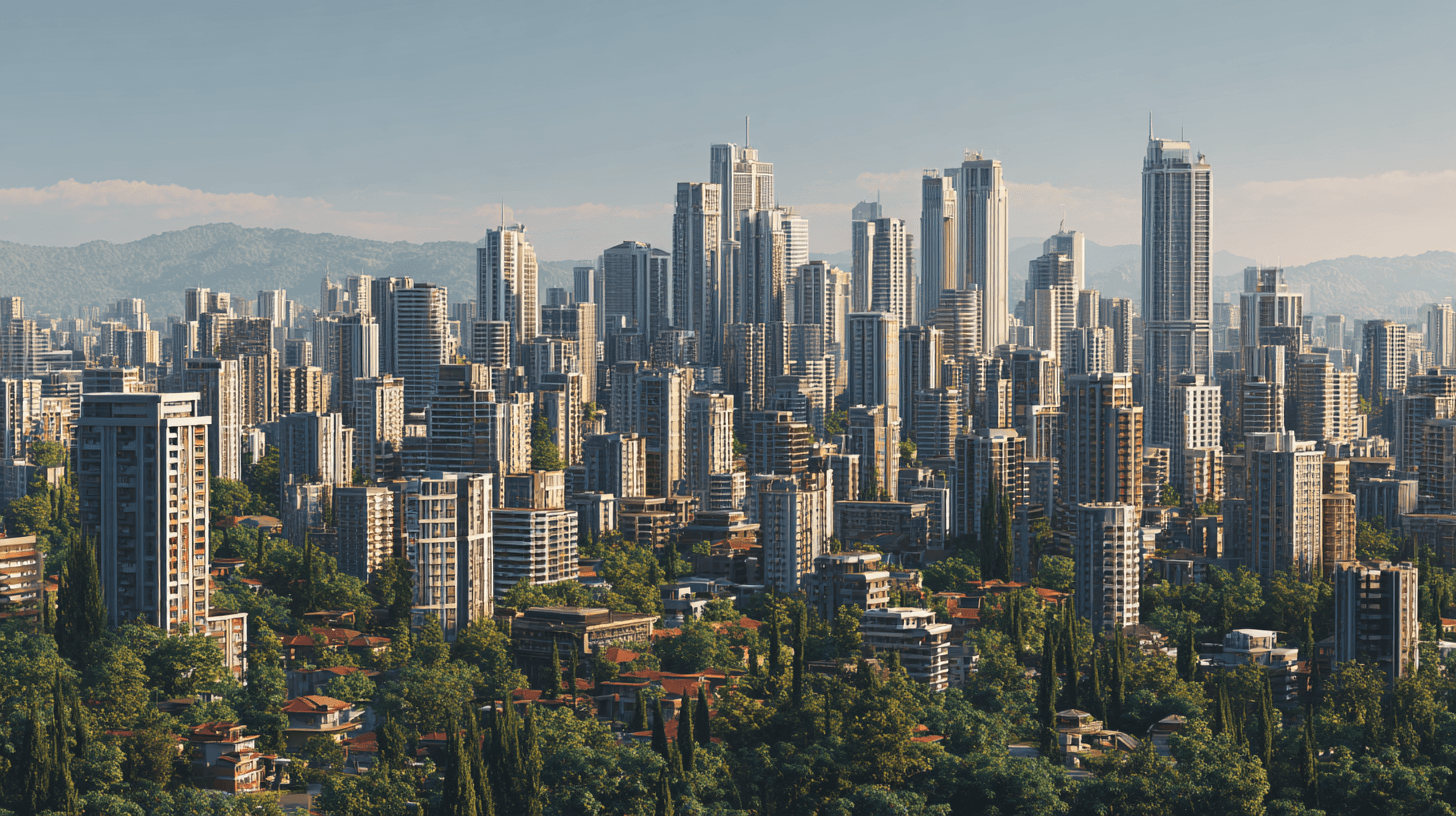
In 1950, New York was the only city on Earth with more than ten million people. Today, dozens of urban regions surpass that mark, and the trend shows no sign of reversing. Farmland keeps shrinking. Skylines keep rising. Commutes keep getting longer, rents keep climbing, and still, people keep moving in.
This is not simply a story about population increase. Globally, the number of people has grown a great deal since 1950, but cities have grown even faster, pulling in a larger share of humanity with each passing decade. According to United Nations estimates, more than half of the world’s population now lives in urban areas, a figure expected to keep rising through the middle of this century.
The puzzle is not why cities exist. Humans have clustered into settlements for thousands of years. The real question is why urban growth keeps accelerating even after cities become crowded, expensive, and difficult to live in. What keeps drawing people toward density instead of away from it?
The answer lies less in preference and more in a stubborn economic logic: proximity pays. Understanding how that logic works—and where it eventually breaks down—explains most of what shapes modern urban life.
The Economic Logic Behind Proximity
Economists call the core force behind urban growth “agglomeration economies.” The term is technical, but the idea is simple: when many people and businesses operate close together, they become more productive than they would be spread out.
A software company benefits from being near other software companies because engineers can move between employers without relocating, ideas circulate faster in shared social and professional circles, and specialized suppliers—from cloud infrastructure firms to legal specialists in tech contracts—set up nearby to serve the cluster. None of this requires central planning. It emerges because proximity lowers the cost of doing the things businesses already need to do: hire specialized workers, find suppliers, and learn what competitors are doing.
This is why industries cluster geographically even when nothing about the technology requires it. Finance concentrates in a handful of global cities. Film production concentrates in a small number of regions. Advanced manufacturing clusters around specific supply chains. In each case, distance is not just inconvenient—it is expensive, because so much of modern work depends on frequent, unplanned contact between people who might not know in advance that they need each other.
Labor markets reinforce the pattern. A large city offers something a small town cannot: many employers competing for the same skills, and many workers competing for the same jobs. That density protects both sides against risk. If one employer struggles, a worker in a big labor market can often find another position without moving. If a business needs a specific skill, a large city is more likely to have someone who has already learned it. Small labor markets carry more risk in both directions, which is one reason people are willing to pay high urban rents for access to them.
From Farms to Factories to Services
The migration toward cities did not happen all at once, and it did not happen for the same reasons in every era.
The first major wave, driven by industrialization, pulled people out of agriculture and into factory work. Farming had always required scattered labor spread across the land. Factories required something different: workers who could show up in large numbers at a single location, day after day. Cities formed around this need, and as agricultural productivity improved—fewer farmers were needed to feed the same population—rural labor had less reason to stay in the countryside.
A second wave followed as economies shifted from manufacturing toward services. Services are harder to standardize than factory work, and many depend on face-to-face interaction: consulting, finance, design, media, research, and management all benefit from proximity in ways that a physically dispersed assembly line never could. This shift favored cities even more strongly than industrialization had, because service work rewards exactly the kind of unplanned collaboration that density makes possible.
Technology complicates this story without resolving it. Remote work tools have made physical presence less necessary for some tasks, and the years following the COVID-19 pandemic tested, in real time, whether videoconferencing could substitute for in-person collaboration. The evidence so far is mixed: some routine coordination has moved online successfully, but complex, creative, and relationship-dependent work has proven far harder to replicate at a distance. Cities have adapted rather than emptied out.
What Cities Offer That Distance Cannot
Beyond wages and jobs, cities concentrate something less tangible but equally powerful: options.
A single large city can support institutions that a smaller population cannot sustain—specialized hospitals, research universities, cultural venues, and niche businesses that require a large customer base to survive. A city of two million people can support restaurants serving cuisines from dozens of countries, medical specialists treating rare conditions, and cultural institutions that would fail in a market a tenth the size. This variety becomes self-reinforcing. People move to cities partly because of what already exists there, and their presence makes it possible for even more specialized options to emerge.
There is also a demographic dimension. Cities disproportionately attract young adults leaving home for the first time, precisely the group most willing to trade stability for opportunity. This population is more likely to change jobs, try new fields, and take financial risks—all decisions that benefit from being in a place with many alternatives close at hand. A young professional in a small town who loses a job may need to relocate entirely. The same person in a major city can often find a new position without leaving their neighborhood.
The Housing Paradox
If cities are so productive, an obvious question follows: why don’t they simply expand to house everyone who wants to live there?
In practice, most large cities restrict how much new housing can be built, through zoning rules, height limits, historic preservation requirements, and lengthy approval processes. These restrictions are not accidents of bureaucracy. They usually reflect real trade-offs that existing residents care about—preserving neighborhood character, protecting property values, managing infrastructure capacity, and avoiding rapid change to established communities.
The economic effect, however, is that housing supply grows more slowly than housing demand in many successful cities. When demand keeps rising and supply cannot keep pace, prices rise instead. This is a major reason that some of the world’s most economically productive cities are also among its least affordable. The very success that draws people in creates pressure that makes staying difficult.
Researchers who study urban economics have found that restrictive housing policy in high-productivity cities carries a broader cost: when people cannot afford to move to where the most productive jobs are, the economy as a whole produces less than it otherwise would. In other words, housing shortages in successful cities are not just a local hardship. They shape how efficiently an entire national economy functions, because they determine who can access the most productive labor markets.
A Common Misconception: It’s Not Only About Jobs
A widespread assumption holds that people move to cities purely for economic opportunity, and that once remote work removes the need to live near an employer, urban growth will slow or reverse.
The evidence complicates this assumption. Surveys and migration data consistently show that people weigh a mix of factors: proximity to family and social networks, access to healthcare and education, cultural and recreational amenities, safety, and a sense of belonging, alongside economic opportunity. Jobs matter enormously, but cities also function as concentrated marketplaces for relationships, services, and experiences that are harder to access in smaller places.
This helps explain why urban growth has continued even as remote work has expanded. A city offers value that persists independent of any single employer’s location decisions. Removing the requirement to commute daily to a specific office changes where some people choose to live within a metropolitan region—often toward its outer edges—but it has not eliminated the broader pull of urban life.
The Limits and Costs of Growth
None of this means urban growth is costless or unlimited. Rapid growth strains transportation systems, water supplies, sanitation, and housing markets, particularly in cities where infrastructure investment has not kept pace with population increase. In parts of the world experiencing the fastest urbanization, this strain is severe: informal settlements without reliable utilities have grown alongside formal city centers, creating stark inequality within the same urban region.
Congestion, pollution, and rising living costs eventually push some residents and businesses toward smaller cities or suburban areas, a pattern economists call diseconomies of agglomeration. Beyond a certain point, the costs of density—traffic, high rents, competition for limited space—can outweigh the benefits, at least for individual households or firms making location decisions. This is why urban growth is rarely a smooth, permanent expansion. It moves in waves, shaped by the shifting balance between what density offers and what it costs.
Why the Pattern Still Holds
The underlying economic incentives that drive urbanization have not disappeared, even as technology, remote work, and shifting cultural preferences reshape the details. Proximity still lowers the cost of collaboration. Large labor markets still protect workers and employers against risk. Concentrated populations still support institutions and services that dispersed populations cannot sustain. These forces operate whether or not any individual city government intends to grow, which is part of why urban expansion so often outpaces the infrastructure meant to support it.
Cities are not growing because someone designed them to. They are growing because density solves practical problems that distance cannot, even in an era of instant communication. The internet reduced many barriers to remote collaboration, but it did not eliminate the advantages of being physically close to other productive, ambitious people.
That is the real answer to why cities keep growing. It is not a mystery of preference or fashion. It is the accumulated weight of millions of individual decisions, each one responding to a simple, persistent fact: for most kinds of valuable work, proximity still pays.