How Modern Art Turned “Is This Even Art?” Into the Point
The Moment of Doubt
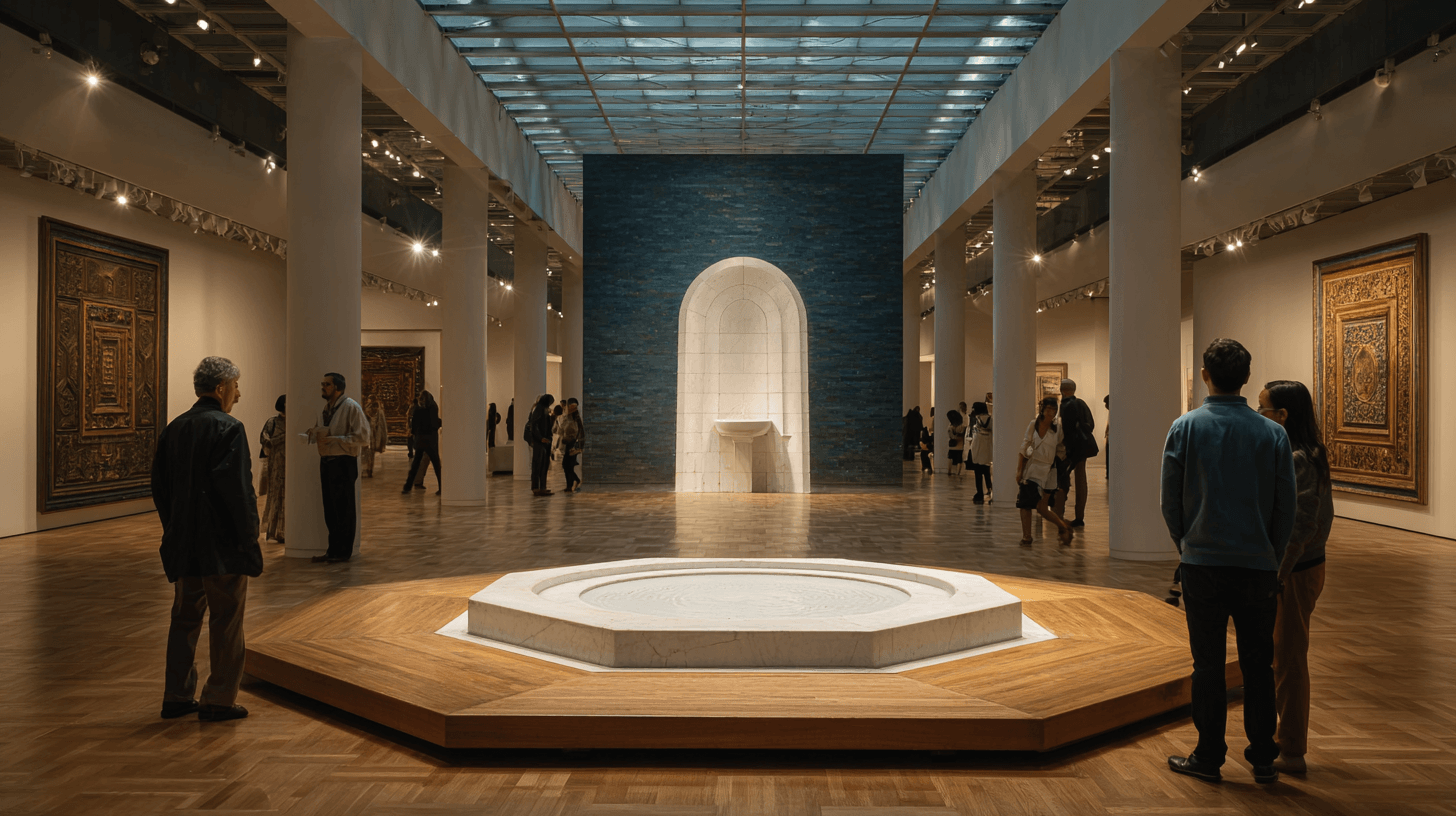
A museum visitor stands in front of a canvas painted a single shade of blue. No brushstrokes to admire, no figures to recognize, nothing that took visible years to master. Nearby, a sign identifies the price the work commanded at auction, and the number is larger than most people will earn in a decade. The visitor’s first reaction is rarely admiration. It is something closer to suspicion: Is this actually art, or has everyone agreed to pretend it is?
That reaction is not new, and it is not simply a matter of taste. For most of Western history, “art” meant demonstrated skill: a painter who could render a hand correctly, a sculptor who could carve marble into something that looked like breathing flesh. Then, over roughly a century, the entire basis for judging art shifted. Skill stopped being the point. Ideas, context, and provocation took its place.
Understanding why requires tracing what actually changed—not in taste, but in the job painters and sculptors thought they were doing.
The Skill Test Art Used to Pass
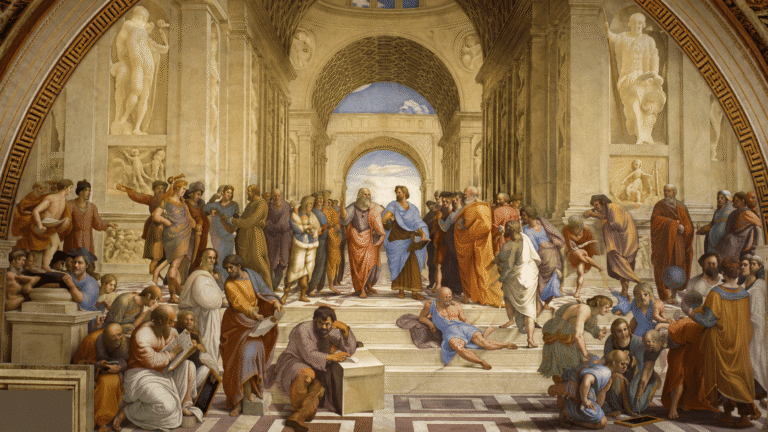
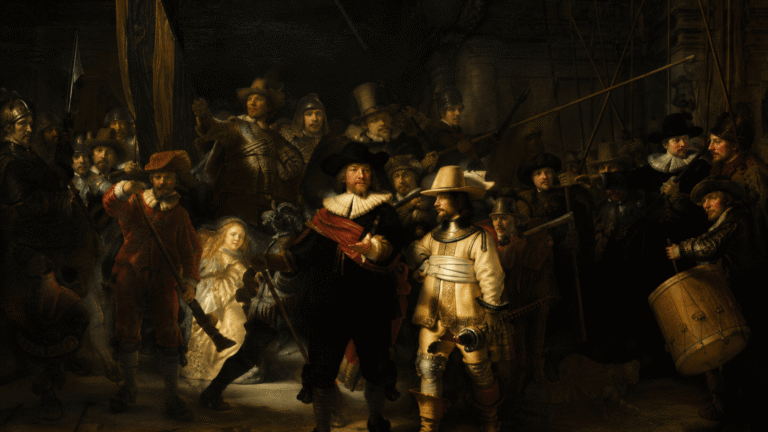
Before the 20th century, a work of art was judged largely by how well it did something specific: depict the world accurately, tell a recognizable story, or display technical mastery that took years to acquire. A portrait was successful if it looked like the sitter. A history painting succeeded if it dramatized an event convincingly. Judging art meant judging craftsmanship, and craftsmanship was something almost anyone could evaluate, even without training, because the goal was visible in the result.
This standard had already produced centuries of extraordinary work, and it gave audiences a shared, intuitive way to separate a masterpiece from a failure. The problem was that this standard depended on a single job for art to perform: showing the world as it looked. Once something else could do that job better, the standard itself became vulnerable.
Photography Took Painting’s Job Away
That “something else” arrived in the 1830s, when practical photography emerged in France and Britain. A camera could capture a face, a landscape, or a historical moment with a precision no brush could match, and it could do so in minutes rather than weeks.
Painters did not immediately abandon realism, but the ground had shifted permanently. If a machine could now produce a more faithful likeness than the most skilled portraitist, then faithful likeness could no longer be painting’s main justification for existing. Artists faced an uncomfortable question: if not accurate representation, what was painting actually for?
Impressionism’s Quiet Answer
The first serious answer came from a group of French painters in the 1860s and 1870s who stopped trying to record the world exactly and started recording how it felt to perceive it. Claude Monet’s paintings of light on water, or Edgar Degas’s paintings of dancers caught mid-motion, were not attempts to compete with a camera. They were attempts to capture something a camera could not: the shifting, subjective experience of looking.
This was already a meaningful departure from centuries of tradition, and many contemporary critics dismissed it as unfinished or careless. But Impressionism still relied on recognizable subjects and visible technique. The larger break was still to come.
When Painters Stopped Trying to Look Like Anything
By the early 20th century, a handful of artists asked a more radical question: if painting no longer had to represent the visible world, did it need to represent anything at all? Wassily Kandinsky is often credited with some of the earliest fully abstract paintings, arguing that color and form could express emotion directly, the way music does, without needing a recognizable subject.
In 1915, the Russian painter Kazimir Malevich exhibited a work now known as Black Square—a black square painted on a white canvas, with no figure, no landscape, no symbol beyond itself. Malevich intended it as a kind of zero point, a deliberate rejection of centuries of representational painting rather than a lapse in ambition.
For audiences trained to judge art by technical illusion, this was close to incomprehensible. There was no skill to marvel at in the traditional sense, no subject to recognize, no story to follow. The painting asked viewers to evaluate an idea instead of a technique, and many viewers were not prepared to do that.
The Urinal That Changed the Rules
If abstraction unsettled the idea that art had to represent something, the French artist Marcel Duchamp went further and unsettled the idea that art had to be made by hand at all. In 1917, Duchamp submitted a mass-produced urinal, turned on its side and signed with a pseudonym, to an exhibition in New York under the title Fountain. He had not carved it, painted it, or altered it in any significant way. He had simply selected it and declared it art.
The submission caused controversy immediately, and the original object was lost or destroyed; only later replicas survive. But the underlying idea proved more durable than the object itself. Duchamp’s “readymades” argued that art could be defined by the artist’s choice and framing rather than by manual craftsmanship. An ordinary object, placed in the context of a gallery and accompanied by an artist’s decision, could function as art even though nothing about its physical form had changed.
This is arguably the single most important shift behind the modern “is this even art?” reaction. Once an artist’s decision, rather than an artist’s hand, could make something art, the boundary between art and non-art stopped being visible to the naked eye.
Why Critics Started Asking a Different Question
By the second half of the 20th century, philosophers and critics were grappling directly with the consequences of Duchamp’s move. The philosopher Arthur Danto argued that an object becomes an artwork not because of any purely visual property it possesses, but because it enters an “artworld”—a network of theories, history, and institutions that gives it meaning. Two visually identical objects, Danto pointed out, could differ entirely in status: one a piece of art, the other an ordinary object, depending entirely on context, intention, and interpretation rather than appearance.
Around the same time, the philosopher George Dickie proposed what became known as the institutional theory of art: something counts as art when it is presented as a candidate for appreciation by people acting on behalf of an art institution—a gallery, a museum, a critic, an artist working within that tradition. Neither theory claimed that anything could become art automatically. Both argued that art’s boundaries were now set by context and convention rather than by visible technique alone.
This explains why the central question shifted for critics. The old question was, “Is this good art?” The newer, more unsettling question became, “Is this art at all?”—and that question could no longer be answered just by looking harder at the object.
The Market Learned to Reward Provocation
A parallel development compounded the confusion: the art market discovered that controversy could be commercially valuable. Andy Warhol’s paintings of Campbell’s Soup cans, first exhibited in 1962, deliberately used the imagery of mass consumer culture rather than any personal, expressive technique, and the work’s flatness was precisely the point—a comment on repetition, branding, and the mechanical reproduction of images in postwar America.
Later artists pushed the provocation further. Piero Manzoni sealed his own preserved excrement into ninety numbered tin cans in 1961 and priced each can by the equivalent weight in gold, a deliberate satire of the art market’s tendency to inflate the value of anything an established artist signed. Decades later, Damien Hirst preserved a tiger shark in formaldehyde, and Tracey Emin exhibited her own unmade bed, complete with the debris of a difficult period in her life, as a work titled My Bed in 1998.
Each of these works generated exactly the reaction their creators anticipated: public outrage, tabloid mockery, and headlines asking whether the art world had lost its mind. That reaction was not incidental. It became, for some artists, part of the work’s meaning—evidence that art could still provoke a society increasingly desensitized to shocking imagery.
What the Skepticism Gets Right—and Wrong
It would be a mistake to treat every instance of public skepticism as simple philistinism. Some of it reflects legitimate concerns. Contemporary art markets are opaque, prices can be driven by speculation and reputation rather than any independent measure of merit, and a small number of collectors, dealers, and institutions have enormous influence over which artists are declared significant. Skepticism about whether a six-figure or seven-figure price tag reflects genuine cultural value, rather than market manipulation or celebrity, is often reasonable.
At the same time, the assumption that “real” art must display visible technical skill rests on a definition of art that was itself a historical choice, not a timeless law. Representational skill was the dominant standard for centuries largely because painting and sculpture had few other jobs to compete for. Once photography, industrial manufacturing, and mass media took over the tasks that skillful representation used to perform, artists redirected their efforts toward ideas, context, and conceptual meaning—territory that cannot be judged the same way a portrait’s likeness can be judged.
The tension, then, is not simply between “real art” and “fake art.” It is between two different and historically specific definitions of what art is for.
Why the Question Still Won’t Go Away
The skepticism aimed at modern and contemporary art persists because the shift it responds to was genuinely enormous. For most of human history, judging art required no specialized theory: you looked at the object and assessed how well it did what it was clearly trying to do. Contemporary art frequently withholds that clarity on purpose, asking viewers to evaluate intention, context, and historical position instead of technique.
That demand is uncomfortable, and it is reasonable for audiences to resist being told that discomfort is itself a sign of sophistication. But the discomfort also points to something real: art had to redefine its own boundaries once photography, mass production, and conceptual philosophy took away its older, more stable justification.
The urinal, the black square, and the unmade bed did not survive controversy because critics and institutions decided to be difficult. They survived because each one forced a serious reconsideration of what art actually requires—and that reconsideration, unresolved, is still exactly what makes visitors stop in front of a plain blue canvas and ask whether they are being fooled.