What Was the Civil Revolution? How Citizens Overthrew the Old Political Order
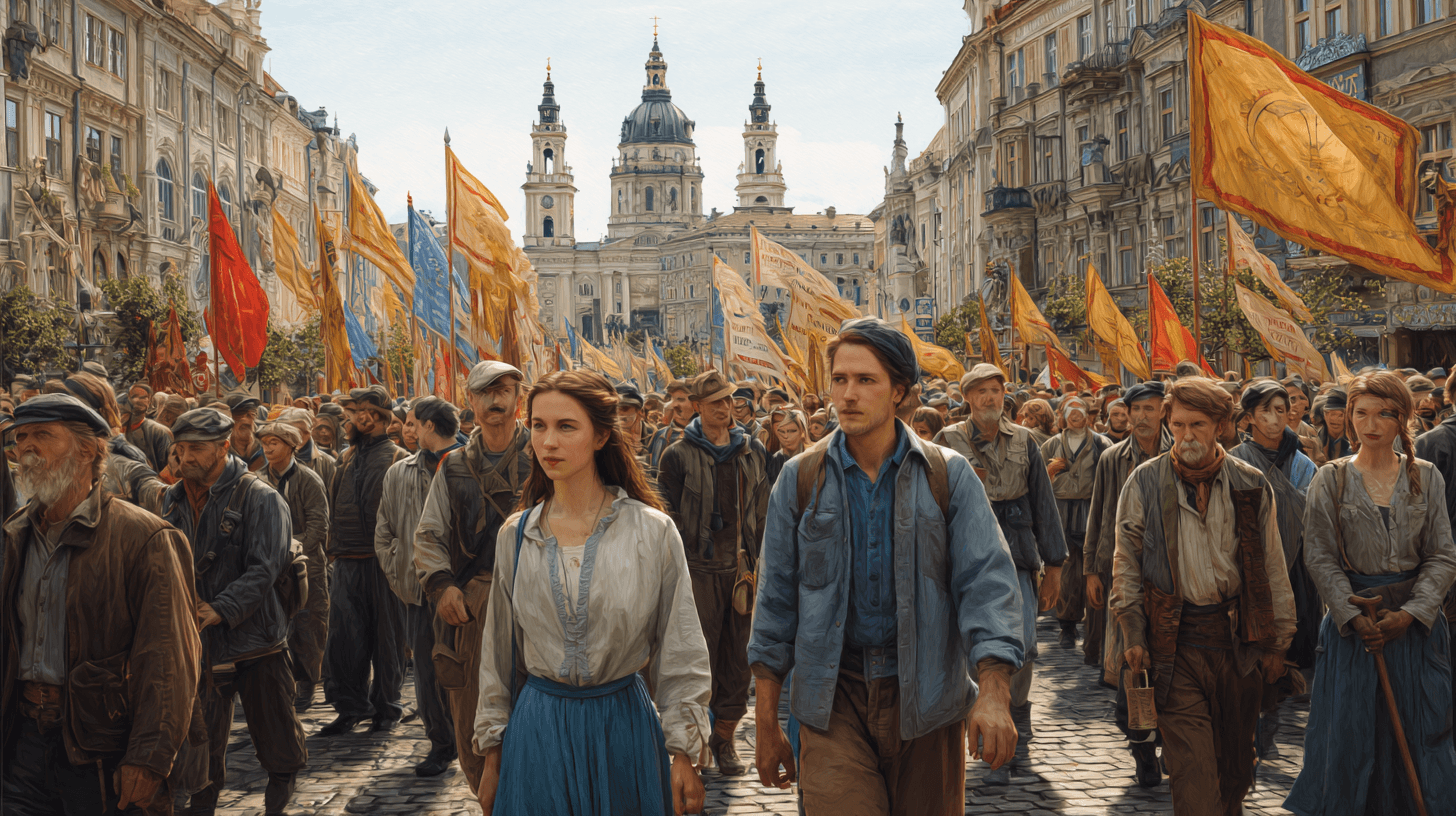
In the summer of 1789, a crowd in Paris broke into a fortress-prison that held only seven inmates. The Bastille was not militarily significant, and it barely resisted. Yet its fall became one of the most famous events in modern history, because it was never really about the prisoners inside. It was about who had the right to hold power in the first place.
That question—who gets to rule, and by what authority—sits at the center of what historians call the civil revolution. The term describes a distinct pattern of political upheaval that swept through England, the American colonies, and France between the seventeenth and eighteenth centuries, and it later became a reference point for revolutionary movements around the world. These events look different on the surface: one involved a king losing his head, another a colonial war for independence, a third a mass uprising against a monarchy centuries old. But underneath, they shared a common target. Each one attacked the idea that political power belonged by birthright to a king, a noble class, or a church.
Understanding what a civil revolution actually changed—and what it did not—explains why the concept still shapes how we think about rights, citizenship, and government today.
What “Civil Revolution” Actually Means
The phrase can sound vague, so it helps to be precise about what historians mean by it. A civil revolution is not simply any revolt or change of ruler. Dynasties had been overthrown for centuries without altering the underlying system of power.
What sets these revolutions apart is that they replaced a political order based on inherited status with one based, at least in principle, on law, rights, and citizenship. Before these upheavals, political authority in much of Europe rested on a fairly simple logic: the monarch ruled because of birth and divine sanction, the nobility held privilege because of ancestry, and ordinary people had few formal rights against either. A civil revolution challenged that logic directly. It argued that legitimate authority came from the people being governed, not from bloodline or religious claim.
This is why the label “civil” matters. The revolutions were fought in the name of the citizen—a legal and political status, rather than a subject bound by personal loyalty to a ruler. That shift, from subject to citizen, is the thread connecting England’s upheavals in the 1600s, the American Revolution of the 1770s, and the French Revolution of 1789.
The Order These Revolutions Attacked
To see why this shift mattered, it helps to understand what came before it: the system historians often call the ancien régime, or old order.
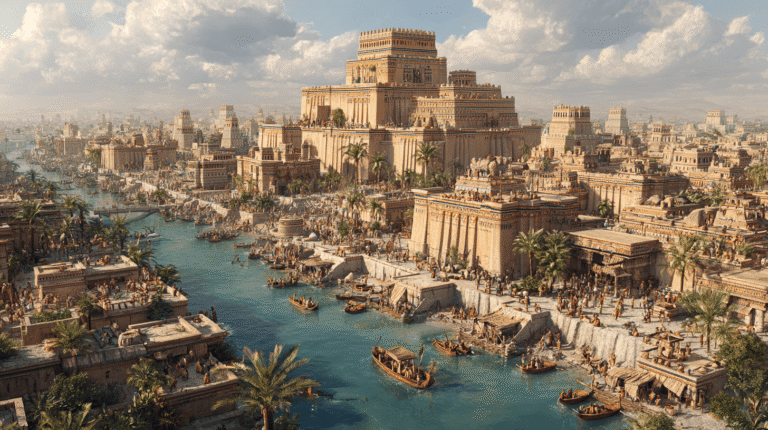
Under this system, society was typically divided into fixed estates. In France, the clergy and nobility made up a small fraction of the population but held enormous privileges, including exemption from most taxation. The remaining majority—merchants, artisans, peasants, and laborers—carried the tax burden and had almost no formal voice in how the country was governed. Political power was concentrated in a monarch who claimed to rule by divine right, a doctrine holding that the king’s authority came directly from God and could not legitimately be challenged by his subjects.
England had its own version of this structure, with a monarchy that claimed broad authority over law, taxation, and religion, checked only unevenly by a Parliament of landowners. The American colonies existed under a different variation again: subjects of a distant king who taxed them and regulated their trade, but who allowed them no representation in the parliament making those decisions.
In each case, ordinary people had obligations to the state—taxes, loyalty, military service—without a corresponding claim on how that state was run. That imbalance did not create revolution by itself. It created pressure. What turned pressure into upheaval was a combination of new ideas and a moment when the old system could no longer manage the demands placed on it.
The Ideas That Made Revolution Thinkable
Ideas alone rarely cause revolutions, but they shape what people believe is possible. During the seventeenth and eighteenth centuries, a set of political philosophers gave dissatisfied populations a new vocabulary for their grievances.
Thinkers such as John Locke argued that legitimate government rested on the consent of the governed, and that individuals possessed natural rights to life, liberty, and property that no monarch could justly take away. Jean-Jacques Rousseau pushed further, arguing that true political authority came from the collective will of the people themselves. These were not merely abstract arguments confined to books read by a small elite. By the mid-1700s, they circulated through pamphlets, newspapers, and salons, reaching merchants, lawyers, and educated townspeople who had wealth and standing but no political power to match it.
This is a detail that popular memory often flattens: civil revolutions were rarely uprisings of the poorest members of society acting alone. They were typically driven by a rising middle class—merchants, professionals, and property owners—who had gained economic influence under the old system but were denied the political influence to match it. In France, this group is often described using the term bourgeoisie. In the American colonies, it included merchants, lawyers, and landowners who resented taxation without any say in how it was levied. Enlightenment ideas gave this class a moral and philosophical case for demanding political power to match their economic weight.
Three Revolutions, One Underlying Pattern
The clearest way to see the shared logic of civil revolution is to look at how it played out differently in three places.
England experienced its version earliest, though in fits and starts rather than one clean uprising. The English Civil War of the 1640s ended with the execution of King Charles I, an extraordinary act that signaled monarchs were not beyond the reach of political consequence. Decades of instability followed until the Glorious Revolution of 1688 established, more durably, that the monarch would rule within limits set by Parliament rather than by unchecked personal will. This laid groundwork for constitutional monarchy: a system in which a king or queen retains ceremonial and limited authority, while elected representatives hold the practical power to make law.
The American Revolution followed a related but distinct path. Colonists were not overthrowing a domestic king so much as rejecting the authority of a distant one who taxed and legislated for them without their participation. Their central grievance, distilled into the phrase “no taxation without representation,” was fundamentally a claim about citizenship: that political obligation without political voice was illegitimate. The result was not a monarchy reformed but an entirely new republic, built explicitly on the idea that government derives its power from the consent of the governed—language drawn almost directly from Locke.
France’s revolution, beginning in 1789, was the most sweeping of the three, because it dismantled the old order at its very foundations rather than reforming it gradually. The Declaration of the Rights of Man and of the Citizen, adopted that same year, asserted that men are born free and equal in rights—a direct repudiation of a society organized around hereditary privilege. Within a few years, the monarchy itself was abolished and Louis XVI was executed, an outcome unthinkable in the more measured English and American cases.
These differences matter. England preserved its monarchy in modified form; America created a republic from the outset; France violently dismantled its monarchy entirely, then cycled through republic, empire, and restoration before settling into a lasting alternative to absolute rule. The revolutions did not follow an identical script. What they shared was the underlying demand: that political legitimacy come from citizens and law, not from inherited status and divine claim.
What Popular Memory Gets Wrong
Textbook summaries often compress these events into a simple story: oppressed people rose up and won freedom. The reality is messier, and the gaps matter for understanding what a civil revolution actually delivered.
None of these revolutions produced immediate, universal citizenship. In revolutionary France, full political rights were initially restricted to men who met property qualifications; women, and often the poorest laborers, remained excluded from formal political life for generations afterward. The American Revolution proclaimed that all men are created equal while leaving slavery intact across much of the new nation, a contradiction that would not be resolved for nearly a century and at enormous cost. England’s Glorious Revolution expanded the power of Parliament, but Parliament itself represented a narrow, wealthy electorate for well over a hundred years afterward.
This is a crucial distinction: civil revolutions replaced the principle that power came from birthright with the principle that power came from citizenship and law. They did not immediately extend that citizenship to everyone. Historians increasingly treat the civil revolutions not as a single completed achievement, but as the opening argument in a much longer struggle over who actually counts as a citizen—an argument still being carried forward today in debates over voting rights, representation, and equality before the law.
Why the Concept Still Matters
The lasting significance of the civil revolutions lies less in any single outcome—a beheaded king, a new constitution, an independent nation—than in the political grammar they established. After these upheavals, it became far harder to argue, with any real force, that a ruler’s authority needed no justification beyond birth and divine favor. Power now required a claim to legitimacy rooted in law, representation, or the consent of the governed, even when that claim was imperfectly honored in practice.
This is why the language of the American and French revolutions—natural rights, the consent of the governed, equality before the law—still anchors constitutions and human rights documents written centuries later, often in countries that had no direct connection to the original events. The specific quarrels of 1640s England, 1770s Massachusetts, or 1789 Paris are now historical footnotes to most of the world. The principle they forced into political life is not.
The civil revolutions did not create democracy in the form we recognize it today, and they left enormous injustices unresolved, sometimes for generations. What they did was permanently dislodge the assumption that political power was simply something some people were born to hold and others were born to obey. Once that assumption cracked, it could never be fully restored—which is why the fall of a nearly empty prison in Paris still means something, long after the building itself was torn down.
Frequently Asked Questions
What is the difference between a civil revolution and other types of revolution?
A civil revolution specifically targets a political system based on inherited privilege and monarchical authority, replacing it with a system based on citizenship, law, and representation. This distinguishes it from later revolutionary movements, such as socialist or communist revolutions, which primarily targeted economic class structures and private property rather than monarchy itself.
Were the English, American, and French revolutions coordinated with one another?
No. They occurred over more than a century and arose from distinct local grievances. However, they influenced one another: Enlightenment thinkers who wrote after England’s upheavals shaped American revolutionary arguments, and American independence in turn inspired French reformers who were already dissatisfied with their own monarchy.
Did the civil revolutions create full democracy?
Not immediately. Political rights after these revolutions were typically limited by property, gender, and in some cases race. The revolutions established the principle that legitimate power comes from citizens rather than birthright, but extending full citizenship to all people took much longer and, in some respects, is still an ongoing process.
Why is the French Revolution considered more radical than the English or American versions?
The French Revolution abolished the monarchy outright and executed the king, along with dismantling the entire structure of noble and clerical privilege. England retained a reformed monarchy, and the American colonies were separating from a foreign ruler rather than overthrowing a domestic one, making the French case the most complete rupture with the old order.