Why Aristotle Is Still Called the Greatest Philosopher
The Philosopher Who Was Wrong About Almost Everything
Aristotle believed the sun orbited the earth. He thought heavier objects fall faster than lighter ones. He argued that flies and other small creatures could spring spontaneously from mud and decaying matter, with no parents at all. Judged purely on the accuracy of his conclusions, much of his science failed the test of time.
And yet, more than two thousand years after his death, Aristotle is still routinely called the greatest philosopher who ever lived. That title survives despite his errors, not because scholars have quietly forgiven them. The claim rests on something else entirely: the tools he built for thinking clearly, the sheer range of subjects he attempted to organize, and the questions he asked that later thinkers could not stop asking.
This is the real puzzle behind Aristotle’s reputation. How does a thinker whose specific claims about physics, biology, and astronomy were overturned still get credit as history’s most influential philosopher? The answer has less to do with what Aristotle concluded and everything to do with how he taught the world to conclude anything at all.
A Student Who Rejected His Teacher’s World
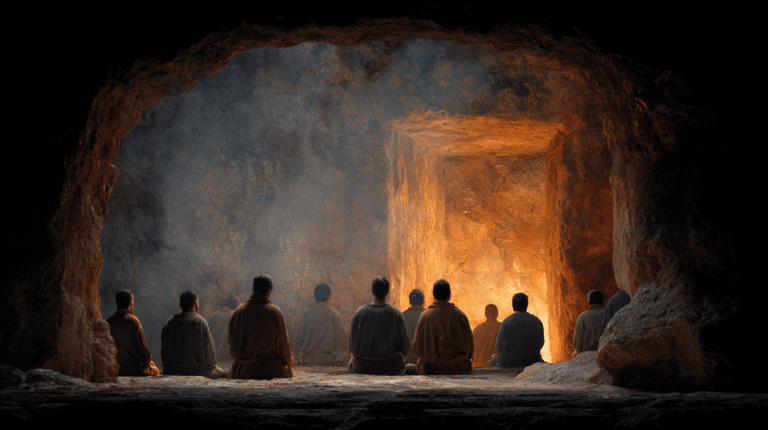
Aristotle arrived in Athens around 367 BCE as a teenager and spent nearly two decades at Plato’s Academy, first as a student and later as a respected member of its community. Plato’s philosophy rested on a striking premise: the physical world we see is only a flickering shadow of a higher, unchanging realm of perfect Forms. A chair we sit on is just an imperfect copy of the eternal Form of “chairness.” True knowledge, for Plato, came from reasoning toward those abstract Forms, not from studying the messy, changeable world of actual chairs, trees, and animals.
Aristotle broke from this in a way that reshaped the future of Western thought. He argued that the Forms Plato prized so highly did not exist in some separate realm at all. Instead, the essence of a thing was embedded within the thing itself, discoverable by careful observation of the physical world.
This was not a small disagreement between colleagues. It was a fundamental split over where knowledge comes from. Plato pointed upward, toward abstraction. Aristotle pointed outward, toward the observable world of plants, animals, weather, and human behavior. That single shift in direction is why Aristotle spent years dissecting fish and studying the reproductive habits of octopuses, while Plato’s dialogues stayed almost entirely in the realm of argument and analogy.
The Man Who Invented the Rules of Argument Itself
Long before Aristotle, people obviously reasoned and argued. What they lacked was a formal system for testing whether an argument was actually valid, independent of whether its conclusion happened to sound true.
Aristotle built that system. In a collection of works later grouped together as the Organon, he developed formal logic, most famously the syllogism: a structure in which two premises lead necessarily to a conclusion. The classic example—all men are mortal, Socrates is a man, therefore Socrates is mortal—looks almost too simple to matter. Its real power lies in the discovery that validity depends on structure, not on content.
This distinction changed how arguments could be evaluated. A syllogism could be perfectly valid in form while resting on a false premise, and it could also be true in its conclusion while having been reasoned toward badly. Separating these two questions—is the reasoning valid, and are the premises true—gave later thinkers, from medieval theologians to modern scientists, a shared standard for testing claims.
Aristotle did not just have opinions about the world. He built the machinery for checking whether anyone’s opinions, including his own, actually held together. That machinery is why his logical works remained standard university material for roughly two thousand years, far longer than his physics survived serious scrutiny.
Building the First Encyclopedia of Everything
What separates Aristotle from almost every other ancient thinker is not depth in one field but breadth across nearly all of them. He wrote systematically on logic, physics, metaphysics, biology, psychology, ethics, politics, rhetoric, and literary theory. Few individuals before or since have attempted to construct a coherent framework covering nearly the entire span of human knowledge as it existed in their time.
His biological work is a useful example of how this ambition played out in practice. Aristotle personally examined and classified hundreds of animal species, describing anatomy, reproduction, and behavior in detail that would not be matched in rigor for centuries. He got a great deal wrong, including his belief in spontaneous generation. But he also got a surprising amount right, including detailed and accurate observations about the reproductive behavior of certain marine animals that were not confirmed by modern scientists until the nineteenth century.
The point is not that Aristotle was a proto-modern scientist who simply lacked better instruments. It is that he treated systematic observation and classification as a legitimate path to knowledge, worthy of the same seriousness as abstract philosophical argument. That attitude, more than any single finding, is part of what later gets called the scientific outlook.
The Question of How to Live Well
Aristotle’s ethical writings, especially the Nicomachean Ethics, tackle a question that never goes out of date: what does it actually mean to live a good life? His answer centers on the idea of eudaimonia, often translated as flourishing or living well, rather than simple happiness in the sense of momentary pleasure.
For Aristotle, flourishing was not a feeling you either had or lacked. It was an ongoing activity, achieved by exercising reason and virtue consistently over a complete life. A single lucky day does not make someone flourishing, and a single misfortune does not necessarily destroy it. Character, developed through habit and practice, was the real foundation.
What the Golden Mean Actually Means
One of his most durable ideas is the doctrine of the mean: the notion that virtue typically sits between two extremes of excess and deficiency. Courage, for instance, sits between the excess of recklessness and the deficiency of cowardice. Generosity sits between wastefulness and stinginess.
This is often misunderstood as a call for blandness or moderation in all things, as if Aristotle were simply recommending caution. That misreads the idea. The mean is not a fixed midpoint on a ruler; it depends on the situation, the person, and the stakes involved. What counts as appropriate courage in a soldier facing battle looks nothing like appropriate courage in a parent confronting a difficult diagnosis. The mean asks for judgment, not for splitting every difference down the middle.
Why So Much of His Science Was Wrong
None of this breadth should obscure a hard truth: Aristotle’s physical science was frequently mistaken, and some of his errors caused lasting damage to later inquiry.
His model of the cosmos placed the earth motionless at the center of the universe, with the sun, moon, and stars embedded in rotating crystalline spheres. This geocentric framework, later elaborated mathematically by Ptolemy, dominated European and Islamic astronomy for well over a thousand years. It was not seriously dislodged until the work of Copernicus, Kepler, and Galileo in the sixteenth and seventeenth centuries.
His physics of motion fared no better. Aristotle held that objects fall at speeds proportional to their weight, a claim later shown to be false through careful experimentation associated with Galileo. He also believed the universe was eternal and unchanging in its basic structure, a view incompatible with later cosmology.
Historians continue to debate exactly how much these errors slowed scientific progress, since Aristotle’s authority was sometimes wielded by later institutions more rigidly than Aristotle himself might have intended. What is not seriously disputed is that his specific physical claims required centuries of correction. The persistence of his reputation despite this record is itself the central puzzle worth explaining, and the explanation lies almost entirely in his method rather than his conclusions.
How One Scholar’s Work Shaped Two Thousand Years of Thought
After Aristotle’s death in 322 BCE, many of his works nearly vanished from circulation in the Latin-speaking West. They survived and flourished instead through translation and commentary in the Islamic world. Scholars such as Avicenna and Averroes studied, translated, and extensively commented on Aristotle’s texts, integrating them with their own philosophical and theological projects. Averroes became so associated with interpreting Aristotle that later medieval writers simply called him “the Commentator.”
These Arabic translations and commentaries eventually reached medieval Europe, largely through Latin translations produced in centers such as Toledo during the twelfth and thirteenth centuries. Thomas Aquinas then undertook the enormous project of reconciling Aristotelian philosophy with Christian theology, producing a synthesis that shaped Catholic thought for centuries and remains influential today.
This transmission history matters because it shows Aristotle’s influence was never confined to a single culture or religious tradition. His logic and metaphysics were absorbed, argued over, and rebuilt by Islamic, Jewish, and Christian scholars across several centuries, each finding something in his framework worth preserving even while disputing his conclusions.
What Popular Memory Gets Wrong
A common misconception treats Aristotle as an ancient authority whose word was simply accepted without challenge, a kind of intellectual dead weight that later science had to overthrow. This flattens a much more interesting reality.
Aristotle was rigorously argued with, revised, and reinterpreted throughout the medieval period, not passively worshipped. Scholars disagreed sharply over how to read him, and some of his conclusions were contested almost as soon as they were written down. The eventual scientific revolution did not simply reject Aristotle wholesale; it rejected specific claims about physics and cosmology while continuing to rely on logical and analytical tools he had helped establish.
The deeper misunderstanding is treating “greatest philosopher” as a claim about being right. It is closer to a claim about being foundational: about building frameworks so influential that even the thinkers who eventually proved him wrong had to work through his categories first.
Why Aristotle Still Matters
Contemporary philosophy still returns to Aristotle in ways that few other ancient thinkers can claim. Virtue ethics, a major approach to moral philosophy, experienced a significant revival in the twentieth century largely by returning to Aristotelian questions about character and flourishing, rather than focusing only on rules or consequences as many modern ethical theories do. His biological classification methods anticipated, however imperfectly, the systematic taxonomy that later science would formalize. His logical categories continue to echo through fields as far removed from ancient Athens as computer science and linguistics.
None of this requires pretending his astronomy or physics were secretly correct. It requires recognizing that a thinker can be foundational precisely by giving later generations something sturdy enough to argue against. Aristotle’s greatest legacy may not be any single answer he gave, but the enduring insistence that questions about ethics, nature, and knowledge deserve careful, systematic, evidence-based argument rather than assertion alone.
That is a difficult standard to meet, and Aristotle did not always meet it himself. But he is the reason so many later thinkers, across so many centuries and cultures, felt obligated to try.