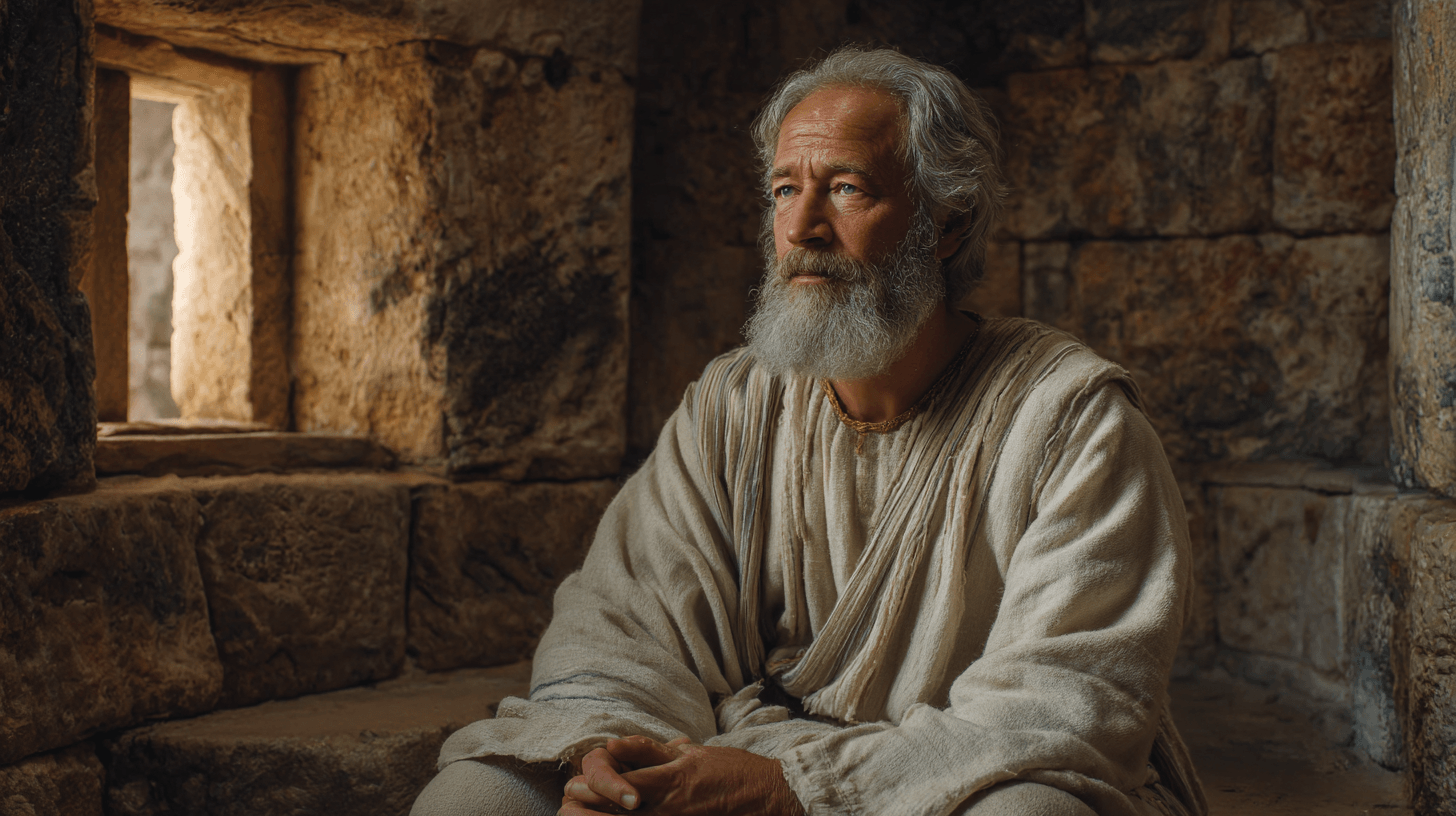
Why Socrates Chose to Drink the Poison
A Verdict Already Decided
In the spring of 399 BCE, an Athenian jury of five hundred citizens found a seventy-year-old philosopher guilty of corrupting the youth and disrespecting the city’s gods. The vote was close, but the sentence that followed was not: death by drinking a cup of poison hemlock. What makes this moment endure, more than two thousand years later, is not simply that Socrates was executed. It’s that he had a real chance to avoid it and refused to take it.
According to Plato, Socrates’ students arranged a bribe that could have gotten him out of Athens entirely. Guards could be paid off. A comfortable exile in another city was within reach. Socrates said no.
That refusal is the real puzzle at the heart of his story. A man convicted on charges many historians consider unjust, offered an escape route that could have saved his life, chose instead to accept the sentence and drink the poison himself. Understanding why requires looking past the trial itself and into how Socrates understood the relationship between a person and the laws that govern them.
The City That Turned on Its Philosopher
To understand the verdict, it helps to understand the Athens of 399 BCE. The city had recently emerged from a catastrophic war with Sparta, one it lost after nearly three decades of fighting. Its democracy had briefly collapsed into a brutal oligarchy known as the Thirty Tyrants, a regime that executed opponents and confiscated property before democratic rule was restored.
Several of the Thirty Tyrants, including their leader Critias, had once been associates of Socrates. Athenian law forbade prosecuting anyone for actions taken before a general amnesty following the tyranny, so Socrates could not be formally charged with responsibility for his former students’ crimes. But the association mattered. In a city still raw from civil war, a philosopher known for associating with men who had helped destroy Athenian democracy was already viewed with suspicion before he ever stood trial.
The formal charges, brought by three private citizens, accused Socrates of impiety and corrupting the young. Historians continue to debate how much of the prosecution was driven by genuine religious concern and how much by lingering political resentment that the amnesty law prevented from being addressed directly. What is clear is that Socrates’ habit of publicly questioning powerful Athenians, exposing the gaps in their reasoning in front of witnesses, had made him plenty of enemies over several decades.
A Defense That Refused to Apologize
Socrates’ trial is described in detail in Plato’s Apology, which presents itself as an account of his defense speech, though scholars debate how closely it reflects his actual words. What the text makes clear is that Socrates did not attempt the standard defense strategy of the time: expressing remorse, appealing to the jury’s sympathy, or bringing forward his family to weep for mercy.
Instead, he defended the value of his own behavior. He argued that his habit of questioning people in the marketplace, exposing what they claimed to know but didn’t, was not corruption but a service to the city. He compared himself to a gadfly sent to sting a large, comfortable horse into wakefulness, framing his provocations as something Athens needed rather than something it should punish.
This was not a winning legal strategy. It was closer to a refusal to play along with the premise that he had done anything wrong. The jury convicted him by a vote historians estimate at around 280 to 220, a margin narrow enough that a more conventional, conciliatory defense might have secured an acquittal.
Athenian trial procedure then required the prosecution and the defendant to each propose a punishment, with the jury choosing between them. The prosecution proposed death. Socrates, given the chance to counter-propose something more survivable, such as exile or a fine, instead suggested that the city honor him with free meals for life, the treatment reserved for civic heroes. When pressed, he offered only a small fine, an amount so modest it read as another provocation. The jury, many of whom had voted to acquit him, responded by voting for death in even greater numbers than they had voted to convict.
The Escape Plan and the Refusal
Athenian executions were sometimes delayed for religious reasons, and Socrates’ case fell during a period when a sacred ship was sent to Delos and no executions could occur until it returned. This gave him roughly a month in prison awaiting death, and it gave his friends time to plan.
Plato’s dialogue Crito, named for the wealthy friend who visits Socrates in his cell, lays out the escape plan in detail. Crito had arranged the money. Guards had reportedly been bribed. Friends in other cities were ready to receive him. From a purely practical standpoint, the plan was workable and the risk was low.
Socrates rejected it, and his reasoning is the philosophical core of the entire episode. He didn’t argue that the plan would fail. He argued that fleeing would be wrong.
The Argument From the Laws
In Crito, Socrates imagines the Laws of Athens speaking to him directly, personified as a kind of collective voice with a claim on his loyalty. Their argument runs roughly like this: Socrates had lived his entire seventy years under these laws, benefiting from the marriage customs, the education system, and the civic order they provided. He had never before expressed a wish to leave Athens for another city, which the Laws take as evidence that he had implicitly accepted the arrangement they offered. He had, in effect, entered into an unspoken agreement to abide by Athenian law, including its verdicts, even the ones that went against him.
To break that agreement now, at the moment it became personally costly, would be to treat the entire relationship as conditional on getting the outcome he wanted. Socrates argues that this would undermine the very idea of a law-governed city, an idea he considers essential to any kind of decent life. A city cannot function, in this view, if its citizens obey its laws only when convenient and discard them the moment they render an unfavorable verdict.
This is not a claim that the verdict was correct. Socrates never concedes that the charges against him were fair or that the jury reasoned soundly. The argument is narrower and, in some ways, more demanding: that the legitimacy of a legal system does not depend on it always ruling in your favor, and that a citizen who has voluntarily lived under a set of laws owes them obedience even in the specific case where those laws have wronged him.
Living the Argument, Not Just Making It
What separates this moment from a purely academic philosophical exercise is that Socrates had spent decades arguing that how a person lives matters more than how long they live, and that a person should never do wrong even to avoid a greater harm to themselves. Escaping meant breaking the law and, in his framing, doing an injustice to the city that had raised him. Staying meant suffering an injustice himself.
Socrates had consistently held, in earlier dialogues attributed to him, that suffering an injustice is preferable to committing one. Fleeing Athens would have required him to commit the very kind of wrong he had spent his life arguing against, in order to avoid the wrong being done to him. Seen this way, drinking the hemlock was not a passive acceptance of defeat. It was the final and most demanding application of a philosophy he had defended in words for decades and had no way to defend in words alone at the very end.
Plato’s account in the Phaedo describes Socrates spending his final hours in conversation with friends about the nature of the soul and the possibility of an afterlife, discussing philosophy calmly until the hour of his execution arrived. Whether every detail of that final conversation happened exactly as recorded is something scholars continue to debate, since Plato was writing partly as a philosopher constructing an argument and not solely as a historian. But the broader picture, of a man who treated his own execution as one more occasion for philosophical consistency, is consistent across the ancient sources that describe him.
What Popular Memory Gets Wrong
Socrates’ death is sometimes remembered as a simple story of a wise man silenced by an ignorant mob, a martyr for free thought crushed by intolerant authority. There’s real truth in the outline: Athens did execute a man for asking uncomfortable questions, and that fact alone should trouble anyone who values open inquiry.
But the fuller picture is more complicated. Socrates was not a passive victim swept along by events. He had chances to soften his defense and didn’t. He had a workable, low-risk escape plan and rejected it on principle. His death was, in significant part, the result of his own deliberate choices, made in keeping with arguments he had made his entire life. Treating him only as a martyr flattens the more difficult and more interesting truth: that he saw his own execution as a test of whether his philosophy could survive contact with the one situation that would cost him everything.
Why the Question Still Matters
The tension Socrates identified, between obeying a legal system and resisting a verdict you believe to be unjust, did not end in ancient Athens. It resurfaces whenever someone must decide whether to comply with a law they consider wrong or to break it and accept the consequences as a form of protest. Later thinkers and activists arguing for civil disobedience have wrestled with a version of the same question Socrates faced in his cell: does accepting punishment within an unjust system demonstrate respect for the rule of law, or does it simply let injustice stand?
Socrates never resolved this tension for everyone else. He resolved it, deliberately and specifically, for himself. That is why the story of his death has outlasted the details of his trial. The hemlock itself was almost incidental. What Athens actually witnessed was a philosopher demonstrating, with his own life, that he meant what he had spent decades saying.